
Review · DERRY DAY TRIPS
Peacemakers Museum Entry Ticket
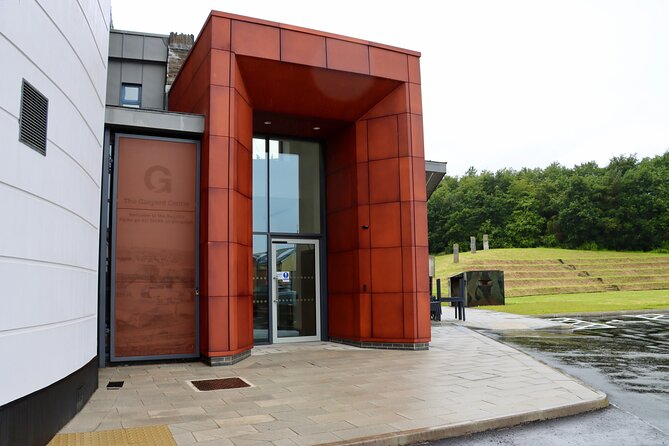
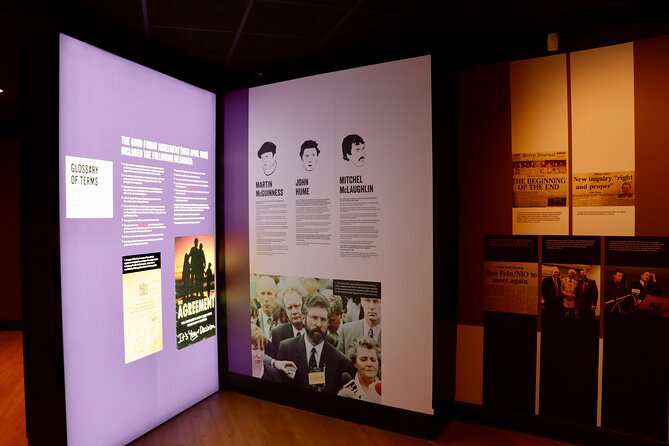
Peace starts with painful dates. In Derry-Londonderry, this Peacemakers Museum ticket takes you through August 1972 to May 2007, using artefacts, oral history, and archive footage to show how conflict turned into the peace process, and why the Good Friday Agreement centered consent. I especially like the way the museum spotlights John Hume, Martin McGuinness, and Mitchel McLaughlin, and I love that admission includes a multilingual audio guide plus an English written guide. One drawback: plan for lots of reading and listening, so 90 minutes can feel fast if you stop for everything.
The exhibit keeps the focus on real people in a real place. You get the argument for peace in plain terms, and you can judge the human impact through first-person material like oral history and interactive displays.
In This Review
- Key things to know before you go
- Peacemakers Museum in Derry-Londonderry: what this ticket actually delivers
- The timeline from August 1972 to May 2007 (and why it matters)
- How the museum tells the story: artefacts, oral history, and archive footage
- The Good Friday Agreement and consent: the heart of the exhibit
- John Hume, Martin McGuinness, and Mitchel McLaughlin: why the museum highlights three leaders
- Ticket value: what you get for about $10.97
- Audio guide and written guide: how to use them without rushing
- What to expect at the stop: Peacemakers Museum, the 90-minute flow
- Where it fits in your Derry day plan
- Practicalities that affect your comfort
- FAQ (quick, practical answers)
- FAQ
- How long does the Peacemakers Museum entry take?
- What is included with the entry ticket?
- Is the ticket mobile or paper?
- What languages are available for the audio guide?
- Where is the museum located?
- What are the opening hours?
- Can I cancel and get a refund?
- Is there anything special about accessibility?
- Should you book Peacemakers Museum entry tickets?
Key things to know before you go
- A tight timeline, big emotional weight: August 1972 to May 2007, then forward-looking implications for the island
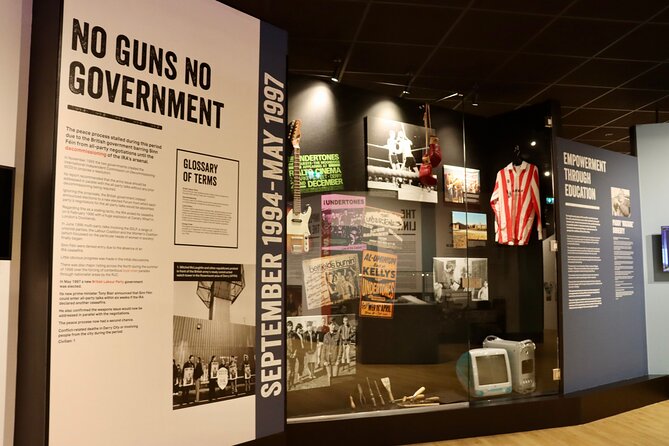
- Artefacts plus testimony: archive footage, oral history, and interactive features, not just posters on walls
- Good Friday Agreement, explained step by step: how the political template formed and why consent matters
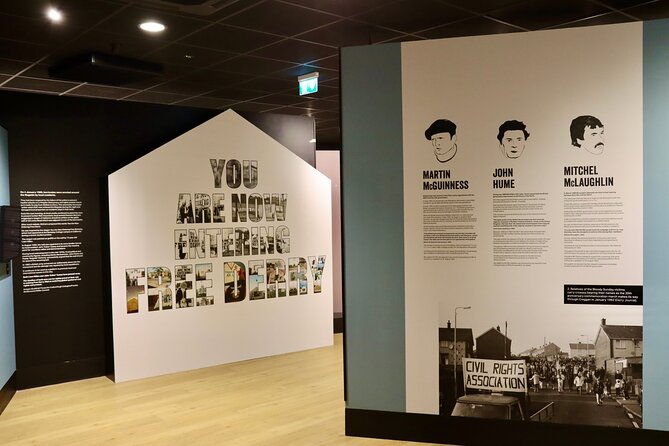
- Three Bogsiders take center stage: John Hume, Martin McGuinness, and Mitchel McLaughlin are key threads throughout
- Your ticket includes guidance: mobile ticket, English written guide, and an audio guide in several languages
More indoor stops for a wet day:
- IRA Troubles Conflict Private Tour Museum Graves Murals and Political Analysis
★ 5.0 · 67 reviews - Saint Patrick Centre Exhibition experience
★ 4.5 · 33 reviews - Titanic Museum and Whiskey Distillery Exploration with Tasting
★ 4.5 · 25 reviews - Belfast City Sightseeing Tour Including Titanic Museum | 6 Hours
★ 4.5 · 9 reviews
Peacemakers Museum in Derry-Londonderry: what this ticket actually delivers
If you want to understand the Troubles without only relying on dates and headlines, this is one of the most useful stops in Derry. The museum is built like a guided story. You move through the conflict period, then the shift into negotiations and implementation, and finally what peace has meant and could still mean for the future.
I also like that it feels rooted in place. Derry-Londonderry is not presented as a backdrop. It is treated as the setting where decisions happened, where lives changed, and where reconciliation became the hard work after the fighting.
The experience runs about 1 hour 30 minutes for most people. That sounds tidy, but the museum packs in a lot. If you read carefully or listen to multiple sections of audio, you’ll want extra time in your day so you do not feel rushed.
The timeline from August 1972 to May 2007 (and why it matters)
The museum covers a specific arc: August 1972 to May 2007. That is a smart choice for visitors, because it frames the conflict as something that evolved rather than staying frozen in one moment.
In practical terms, this timeline helps you connect the dots. You see how the situation changed over the years, how the peace process took shape, and how the Good Friday Agreement became a real plan rather than a wish. It also covers the implementation side, which is often missing in basic overviews.
The final stretch of the story does something useful for your own trip. Instead of ending with an agreement and walking away, the museum also raises implications for the future of the island. It makes you consider peace as an ongoing process, not a final scene.
How the museum tells the story: artefacts, oral history, and archive footage
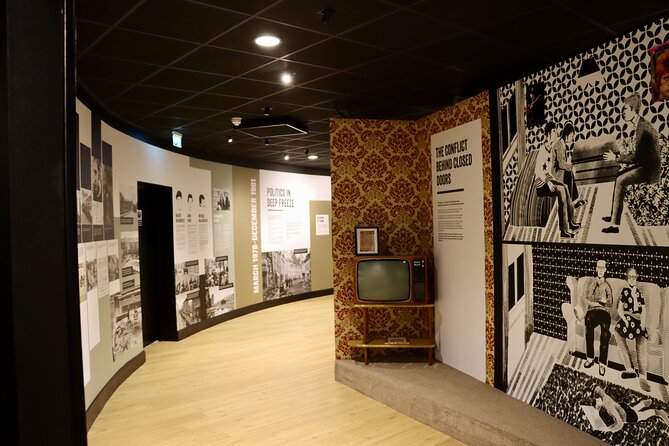
This is not a museum that relies on one format. You get a mix of artefacts, oral history material, archive footage, and interactive features. That matters because different people learn differently, and the subject is too complex for a single storytelling method.
Here’s what that usually feels like inside:
- Artefacts give you tangible anchors, so you stop thinking only in terms of politics.
- Oral history brings the human scale back in, which can be sobering because the time frame is still recent enough to feel close.
- Archive footage adds context and pace, especially when you are trying to understand how events unfolded.
- Interactive elements help you stay engaged when you hit heavier themes.
One practical note from the vibe of the exhibits: there is a lot to read. If you are the type who skims, you may miss key context. If you like to absorb slowly, build in buffer time.
The Good Friday Agreement and consent: the heart of the exhibit
A major theme is how the Agreement was reached and what it meant afterward. The museum explains the political template for resolving the conflict and links that to the principle of consent.
For you, this part is valuable because it turns the peace process into something you can follow. Instead of hearing the Good Friday Agreement name as a trophy, you see it as a mechanism. Consent is the thread that keeps the focus on legitimacy and agreement, not just a ceasefire.
This section also helps you understand the local stakes. Even if you already know the headline version, the museum’s layout pushes beyond slogans. You get the sense that peace required constant negotiation and practical implementation.
More trips over to Derry:

John Hume, Martin McGuinness, and Mitchel McLaughlin: why the museum highlights three leaders
The museum gives a key role to three Bogsiders: John Hume, Martin McGuinness, and Mitchel McLaughlin. That does not mean the exhibit ignores other voices. Instead, it treats these men as makers of conditions that helped create the peace you see today.
The advantage for your visit is clarity. With so many names and events in the broader history, focusing on a few major players helps you track cause and effect. You can better see how different approaches, political strategies, and commitments fed into the larger shift toward the Agreement.
The museum also comes across as trying to be fair-minded in its framing. You are not pushed into one ready-made emotional conclusion. You are given installations and thought-provoking materials that ask you to sit with what reconciliation cost and what it changed.
Ticket value: what you get for about $10.97
At $10.97 per person, the entry ticket prices the museum in a very visitor-friendly range for an experience that takes about 1.5 hours and includes built-in guides. The value is not just the exhibits, it’s the support that helps you understand them.
What you get with admission:
- A mobile ticket
- An audio guide offered in English, Spanish, French, German, and Italian
- A written guide offered in English
- All fees and taxes included
That bundle matters. If you are traveling without a specialist background, having audio in multiple languages lowers the pressure to translate everything yourself. If you prefer reading, the written guide helps you move at your own pace.
You will still need patience. The museum is information-dense, and your brain will do some work. But for many visitors, that is exactly why it is worth paying rather than just passing by a viewpoint or a plaque.
Audio guide and written guide: how to use them without rushing
Because the museum includes both audio and a written guide, you can tailor your experience. If you are the type who wants context fast, follow the audio and use the written guide as a second pass.
If you read best, start with the written guide first, then use audio for sections that feel especially complex or emotional. Either approach helps you avoid the common trap of using just one format and missing nuance.
Also remember this is a museum in English availability, but the audio adds options in other major European languages. That makes it easier for mixed-language groups to experience the material together.
What to expect at the stop: Peacemakers Museum, the 90-minute flow
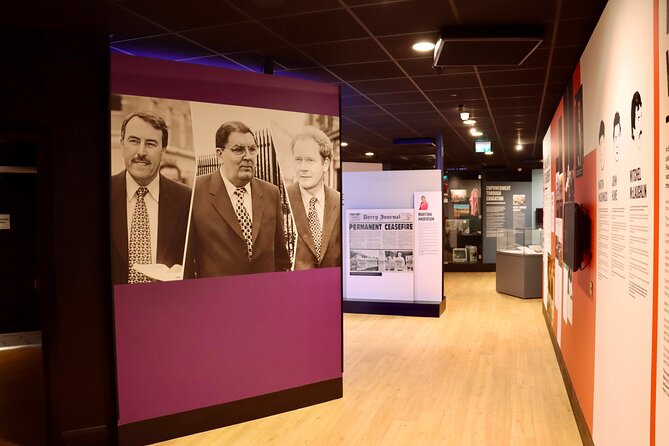
This experience is a one-stop visit. The main stop is the Peacemakers Museum itself, where the story runs from the conflict years through the peace process.
Plan your mental flow like this:
- Set your timeline: the early sections help you understand the evolution from 1972 onward.
- Learn the mechanisms: you then focus on how the Agreement was reached and implemented.
- Meet the people: the leaders and key roles become clearer.
- Consider what comes next: the final displays bring the story forward.
You might see unique displays that highlight lesser-known aspects and perspectives, including details like the Dirty Protest in a female prison. That kind of topic is exactly why this museum earns repeat visits, even for people who think they already know the broad outline.
If you want your visit to feel rewarding rather than overwhelming, give yourself permission to slow down. The exhibits are powerful, and some parts can stick in your head once you leave.
Where it fits in your Derry day plan
The museum sits in Derry-Londonderry and is near public transportation. That makes it easy to fold into a walking route or a short transit hop between major sights.
Opening hours shown for the period 07/29/2024 to 02/16/2027 are Monday through Friday, 9:30 AM to 5:00 PM. That narrow window is practical, but it also means you should plan around it if you are visiting on a weekend.
One smart pairing idea: if you want a fuller sweep of the Troubles story, consider matching this museum with the nearby free Derry museum that covers the 1960s to early 1980s. Together you get more of the timeline, instead of feeling like the story starts too late or ends too early.
Practicalities that affect your comfort
Most travelers can participate, and service animals are allowed. If you rely on public transit, you are in luck since the museum is near public transportation.
The only other practical thing to keep in mind is tempo. The museum includes a lot of information, including interactive features and audio. If you come straight from another big attraction, you may find yourself trying to do too much in your head at once.
So if you can, schedule this when you can give it your attention. A quieter morning slot or an unhurried afternoon often works better than a rushed gap between transfers.
FAQ (quick, practical answers)
FAQ
How long does the Peacemakers Museum entry take?
It is listed as about 1 hour 30 minutes.
What is included with the entry ticket?
Your ticket includes all fees and taxes, an audio guide in English, Spanish, French, German, and Italian, and a written guide in English.
Is the ticket mobile or paper?
It is a mobile ticket.
What languages are available for the audio guide?
The audio guide is offered in English, Spanish, French, German, and Italian.
Where is the museum located?
It is in Derry-Londonderry, Northern Ireland.
What are the opening hours?
The listed opening hours are Monday through Friday, 9:30 AM to 5:00 PM, for the period 07/29/2024 to 02/16/2027.
Can I cancel and get a refund?
No. The experience is non-refundable and cannot be changed for any reason.
Is there anything special about accessibility?
Service animals are allowed, and most travelers can participate.
Should you book Peacemakers Museum entry tickets?
Yes, if you want the peace process explained in a way that feels grounded in real lives. This ticket is good value for a focused 90-minute visit, and the included audio and written guide help you follow the story without needing prior expertise.
You might skip it only if you prefer very light, low-text attractions. The museum has a lot to read and listen to, so it is not the best fit if you want a quick photo stop.
Finally, if your trip includes Derry’s wider Troubles history, this is the kind of place that gives meaning to the headline events. You come away with a clearer sense of how the conflict evolved, why the Agreement mattered, and what consent-based peace asks people to do afterward.
Put up recently for Derry
- Derry Bloody Sunday The Troubles Self Guided Audio Walking Tour★ 5.0 · 1 review
- Derrie Danders: A Self-Guided Audio Tour of the Quayside and North City★ 5.0 · 1 review
- Heritage and Stories: A Comprehensive Derry Private Walking Tour★ 5.0 · 1 review
- Journey into Derry’s Past: A Private Walking Tour★ 5.0 · 1 review
- Full Day Private Luxury Tour in Inishowen Donegal★ 5.0 · 1 review
- Full-day private tour from Game of Thrones Odyssey★ 5.0 · 2 reviews
Derry Day Trips, compared.
Discover the City Walls – Small Group Public or Private Tour
Read our review →

Derrie Danders: Highlights of the Walled City a Self-Guided Audio Tour
Read our review →
Browse the lists this tour appears in