
Review · DERRY DAY TRIPS
Heritage and Stories: A Comprehensive Derry Private Walking Tour
Derry’s Walls have a lot to say. This private walking tour connects Derry-Londonderry’s origins, plantation history, and siege past to the landmarks you can see today, including the Walls of Derry and Peace Bridge views. I really liked how the guide keeps the story clear while you move between gates and major sites.
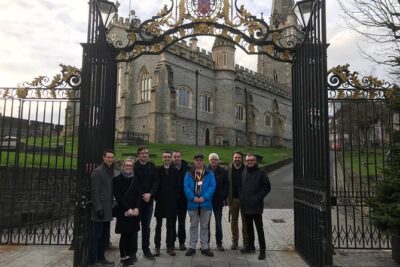
Two things stood out for me. First, the tour focuses on the city’s big turning points, not random facts, so the history feels tied to the streets. Second, you also get a close look at classic architectural landmarks, from the Guildhall’s neo-Gothic style to the classical details around Bishop Gate.
One thing to consider, though: with a 1 hour 30 minute window, the pace is brisk. You’ll cover a lot of ground, so it helps to be ready for a steady walking rhythm and good weather.
In This Review
- Key highlights before you go
- Why This Derry Private Walk Works in 90 Minutes
- Starting at Derry Guildhall and Getting Your Bearings
- Ferryquay Gate, St Columb’s Cathedral, and Siege-Era Storytelling
- Shipquay Gate and the City’s Origins, Plantation Past, and Wall Construction
- Walking the Walls to Shipquay Place: From Siege Era to Today
- Tower Museum and Peace Bridge Views for Big-Picture Context
- Butcher’s Gate to Bishop Gate: Double Bastion and St Augustine’s Church
- Architecture You Can Spot on Your Own During the Walk
- Price, Value, and Who This Tour Is Best For
- Should You Book This Heritage Walk Through Derry?
- FAQ
- How long is the Derry Private Walking Tour?
- Is this tour private or shared?
- What is the price per person?
- Where does the tour start and end?
- What landmarks will I see during the walk?
- Are there admission fees at the stops?
- Is the tour ticket delivered on my phone?
- Is the meeting point near public transportation?
- What is the weather requirement and cancellation rule?
Key highlights before you go

- Private group only for a more personal pace and questions as you walk
- Gates and Walls circuit focused on how Derry’s defenses shaped everyday life
- Ferryquay Gate to Bishop Gate route with stop time at each major landmark
- Peace Bridge and Tower Museum area views to balance “history on foot” with big sightlines
- Architecture spotting across neo-Gothic and classical features at key buildings
- Free admission listed for several stops, including Guildhall and the gates
More Walking Tours in Derry
- Private Guided Walking Tour in Derry City
★ 5.0 · 635 reviews - Derry City: The troubles Bogside walking tour
★ 5.0 · 503 reviews - Walking Bogside History Tour in Guildhall
★ 5.0 · 280 reviews - Derry City: The Bloody Sunday Story – Walking Tour
★ 5.0 · 186 reviews
Why This Derry Private Walk Works in 90 Minutes
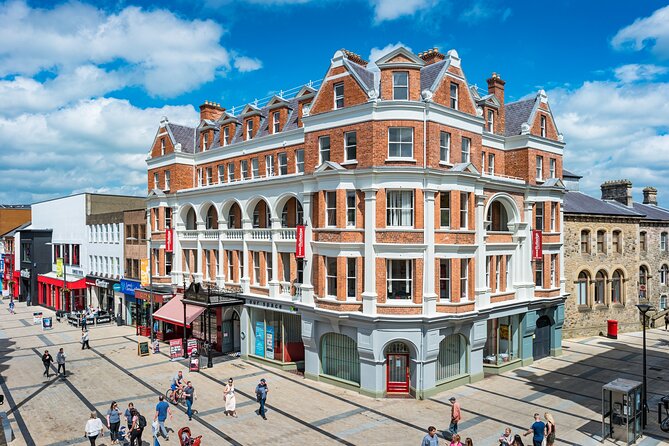
This is designed for people who want the “I get it now” feeling fast. You’re in Derry-Londonderry for about 1 hour 30 minutes, and the stops are built around the most recognizable pieces of the old city: the gates, the Walls of Derry, and the landmark buildings that anchor the story.
Because it’s private, you’re not stuck with a big group moving like a school hallway. You can ask questions in the moment, and you get a guided route that keeps you from wandering into dead ends or missing the best angles. That matters here because Derry’s layout is tied to its fortifications.
Price is $354.40 per person, so this is best seen as a value for time and focus, not a bargain. You’re paying for a guided route that hits multiple “must see” locations inside one short window, including several stops that list free admission.
Starting at Derry Guildhall and Getting Your Bearings
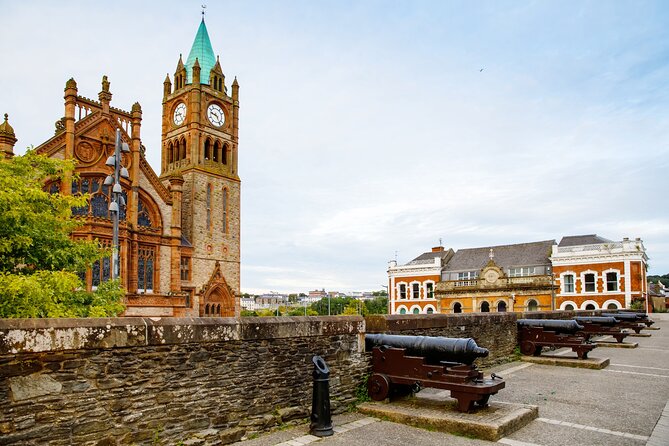
You begin at Derry Guildhall, right in the center of the city. It’s an easy meeting point, and the building itself sets the tone. The Guildhall is known for neo-Gothic architecture, and it’s not just pretty stonework. It functions as a symbol of the city’s heritage and often hosts cultural events.
What I like about starting here is that it gives you context before you start walking the defenses. When you hear about Derry’s development and how its history changed the city, the streets start making sense. Also, this stop lists free admission, which is always a nice bonus.
After the Guildhall, the tour moves you toward the walled city area. Expect a story-driven route where the guide ties what you’re seeing to why it matters.
Ferryquay Gate, St Columb’s Cathedral, and Siege-Era Storytelling
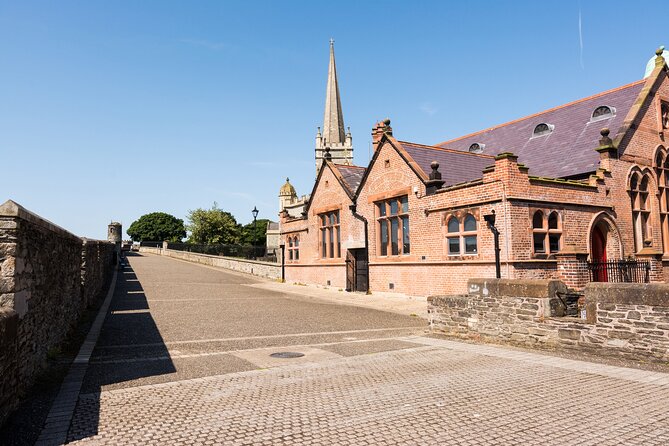
Ferryquay Gate is one of the original gates in the Walls of Derry, and it’s described as dating back to the 19th century. This matters because gates are practical things first. They controlled movement, trade, and defense, and that is exactly what the tour style focuses on: how Derry worked under pressure.
As you reach Ferryquay Gate, you also get linked stops and viewpoints around major landmarks tied to the city’s past. The route includes the Playhouse, St Columb’s Cathedral, and the Fountain Estate, while the guide focuses on the city’s siege history. Even if you know the broad outline of sieges, this tour approach helps connect the conflict to specific places.
One practical tip: plan to look up while you’re standing near gates and institutional buildings. The tour highlights architectural features, so you’ll get more out of the stops if you take a few seconds to actually observe shapes, facades, and the layout around the walls.
Shipquay Gate and the City’s Origins, Plantation Past, and Wall Construction

Next you move to Shipquay Gate, one of Derry’s four original gates, described as dating back to the 18th century. Gates from that era give you a strong “time anchor,” and the tour uses them that way. You’ll hear about Derry’s origins and its plantation history, then connect that to why and how the city’s Walls were constructed.
This is where the tour becomes more than sightseeing. The guide’s job is to make you see the Walls not as a wall-shaped photo spot, but as an answer to real historical pressures. You can look at the gate in front of you and understand the role it played in turning the city into a defended space.
Also, Shipquay Gate lists free admission, so you don’t have to plan for extra costs at this particular stop.
More of the history, walked through:
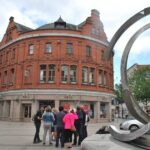


Walking the Walls to Shipquay Place: From Siege Era to Today

A key part of this experience is the way it uses the Walls of Derry as a walking route. You’re not just looking at the fortifications from one spot. You get a guided walk along the Walls that connects the siege era to what you can see in the present.
The tour includes Shipquay Place as part of this “then to now” connection. That’s important, because the Walls are physical history. You can literally follow the line of defense as you move through the city, and the guide helps you interpret what you’re seeing at street level.
If you like history that feels grounded, this portion is a highlight. Instead of a lecture, the guide places you in the right location, then talks about the meaning. That’s also why the route needs a private format. You can pause when something clicks, and you don’t have to keep up with a crowd that’s rushing to the next stop.
Tower Museum and Peace Bridge Views for Big-Picture Context
The route is packed with landmarks, and two of the most “visual break” moments are linked to the Tower Museum and the Peace Bridge.
You’ll pass through or be shown sights connected to the Tower Museum, and you’ll enjoy picturesque views of the Peace Bridge. These viewpoints give your eyes a rest from just reading architecture. They also help you understand Derry as a working city, not only a historical stage.
I find this part useful because history tours sometimes get too locked into old buildings. Peace Bridge is a modern feature in the same city frame, and it helps you see how the old and new sit side by side. Even in a short 1 hour 30 minutes, the tour makes sure you don’t come away with only one mood.
Butcher’s Gate to Bishop Gate: Double Bastion and St Augustine’s Church
As you move to Butcher’s Gate, the tour keeps focusing on the gate system as a map of old Derry. Butcher’s Gate is described as notable for its historical significance and architectural charm, and it works as a transition point from the “Walls and gates” story into the area where the architecture turns more overtly classical.
Then comes Bishop Gate, where you’ll find classical features and symbols tied to the city’s identity. Bishop Gate is described as constructed in the 1780s, including a statue of the city’s patron saint, Columba. The tour also includes Bishops Gate, the Double Bastion, and St Augustine’s Church as part of what you’ll admire around this segment.
This is a strong ending zone for two reasons. First, Bishop Gate is the tour’s endpoint, so you finish with a “big, legible” landmark moment rather than fading out into side streets. Second, the features around here let you compare styles: neo-Gothic at the Guildhall versus classical elements around Bishop Gate.
Practical note: since the route ends at Bishop Gate B&B on Bishop Street, you’re also in a convenient spot to continue exploring nearby streets after the tour wraps.
Architecture You Can Spot on Your Own During the Walk
One of the most praised elements is the way the tour connects heritage with what you can actually see. That shows up in the architecture stops.
Here’s what I’d encourage you to look for as you walk:
- At Derry Guildhall, notice the neo-Gothic vibe and think of it as a civic statement, not just a building you pass.
- At Shipquay Gate and Ferryquay Gate, focus on the idea of gateways controlling entry and movement, then treat the dates (18th century for Shipquay, 19th century for Ferryquay) as time markers for the city’s defensive evolution.
- At Bishop Gate, the tour’s emphasis on classical features and the statue of Columba helps you see how spiritual identity is physically marked in the city’s boundaries.
- When Double Bastion and St Augustine’s Church are in the mix, treat them as parts of the defensive and religious landscape that shaped daily life.
If you’re the kind of traveler who enjoys noticing details, you’ll get extra value here. It’s not just “look, photo, move.” The guide helps you interpret the structures so you remember them later.
Price, Value, and Who This Tour Is Best For
At $354.40 per person for about 1 hour 30 minutes, this is a premium-priced experience. But for Derry, it can still be good value if you care about structure and time.
You’re paying for:
- A private route that keeps the pacing tight and meaningful
- Coverage of major gates and landmark buildings in a short window
- Storytelling that connects the Walls, siege history, plantation history, and the city’s origins to specific locations
- Several stops that list free admission, such as Guildhall and key gates
Where this tour really makes sense:
- If you want a top-down orientation fast, before you explore on your own
- If you prefer guided history that points at real places rather than abstract timelines
- If your group values comfort and interaction over squeezing into a larger group format
Who might feel it’s less worth it:
- If you already know the city well and only need one or two specific sites
- If you hate walking and would rather split your time into shorter, single-location visits
Should You Book This Heritage Walk Through Derry?
I’d book it if you want a guided “map with meaning.” The route hits Derry’s signature elements, the Walls of Derry, the major gates, and the landmark architecture tied to both identity and defense. It also ends in a place that makes it easy to keep exploring.
If you’re flexible about pace and you’re going in with good expectations for a busy 90 minutes, this tour earns its price by compressing a lot of key city story into one walk. The tour also seems to be strongest when you value a guide who is professional and friendly, because that comfort makes it easier to stay engaged for the full time.
FAQ
How long is the Derry Private Walking Tour?
It lasts about 1 hour 30 minutes.
Is this tour private or shared?
This is a private tour/activity, and only your group will participate.
What is the price per person?
The price is $354.40 per person.
Where does the tour start and end?
It starts at Derry Guildhall in Londonderry and ends at Bishop Gate B&B, 150 Bishop St, Londonderry.
What landmarks will I see during the walk?
You’ll see landmarks including the Shipquay Gate, Walls of Derry, Guildhall, Tower Museum, and Peace Bridge views. The route also covers Ferryquay Gate, the Playhouse, St Columb’s Cathedral, and the Fountain Estate, plus Bishops Gate, Double Bastion, St Augustine’s Church, and Butcher’s Gate.
Are there admission fees at the stops?
Some stops list free admission, including the Guildhall, Ferryquay Gate, and Shipquay Gate. The rest of the stops do not specify admission fees in the provided details.
Is the tour ticket delivered on my phone?
Yes, the tour includes a mobile ticket.
Is the meeting point near public transportation?
The meeting point is near public transportation.
What is the weather requirement and cancellation rule?
The experience requires good weather. Free cancellation is available, and you can cancel up to 24 hours in advance for a full refund.
Put up recently for Derry
- Derry Bloody Sunday The Troubles Self Guided Audio Walking Tour★ 5.0 · 1 review
- Derrie Danders: A Self-Guided Audio Tour of the Quayside and North City★ 5.0 · 1 review
- Journey into Derry’s Past: A Private Walking Tour★ 5.0 · 1 review
- Full Day Private Luxury Tour in Inishowen Donegal★ 5.0 · 1 review
- Full-day private tour from Game of Thrones Odyssey★ 5.0 · 2 reviews
- Londonderry Private Walking Tour With A Professional Guide★ 5.0 · 2 reviews
Derry Day Trips, compared.
Discover the City Walls – Small Group Public or Private Tour
Read our review →
Derrie Danders: Highlights of the Walled City a Self-Guided Audio Tour
Read our review →Browse the lists this tour appears in