
Review · TROUBLES TAXI TOURS
History of Belfast conflict and terror 1 hour black taxi tour
Belfast lessons ride in a black taxi. In about an hour, you roll past key sites and get a driver-guide account of The Troubles, plus major mural stops that are built for seeing, reading, and photographing. The Peace Wall and surrounding street scenes make this feel personal, not textbook.
I love that the commentary is lived-in, not staged, with the driver explaining what he remembers from the conflict. I also like how the tour is designed for quick visual hits, from murals to memorial spaces, so you can grasp a lot without spending a full day.
The trade-off is that it is short and fast. Some stops are brief, and the themes are emotionally heavy, so it helps to show up ready for serious subject matter.
In This Review
- Key things to know before you go
- Black Taxi and Murals: Why This 1-Hour Format Works
- Price and What You Get in 1 Hour
- Meeting Point and Pickup: How to Start Smoothly
- From Bobby Sands to the Peace Wall: The Stop-by-Stop Route
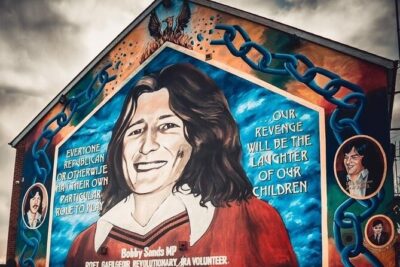
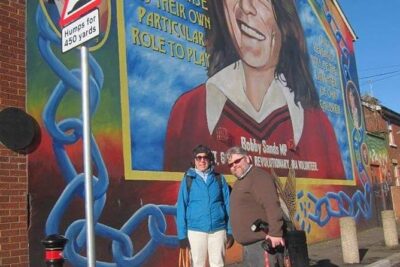
- Stop 1: Bobby Sands Mural, with multiple perspectives
- Stop 2: Divis Flats and the military role
- Stop 3: The International Mural Wall on Divis Street
- Stop 4: Bobby Sands Mural again, plus PIRA context
- Stop 5: Clonard Monastery and secret talks
- Stop 6: The Peace Wall, Belfast’s long division
- Stop 7: Shankill Road and Loyalist murals
- The Driver-Guide Factor: Why This Tour Feels Different
- Mural Etiquette and Photo Strategy (So You Get More Out of Each Stop)
- Who This Tour Suits Best
- Should You Book This Belfast 1-Hour Black Taxi Tour?
- FAQ
- How long is the Belfast conflict and terror black taxi tour?
- What is the price per person?
- Is pickup offered, and where do I meet?
- Do cruise ships have pickup?
- What language is the tour offered in?
- Do I need to pay for admission at the stops?
- Is there a mobile ticket?
- Is free cancellation available?
- Are service animals allowed?
Key things to know before you go
- A black taxi route that links major Belfast conflict sites without long transfers
- Driver-guide personal stories about how everyday life worked during The Troubles
- Mural-focused photo stops, including major Peace Wall views
- Clonard Monastery and the peace process, tied to secret meetings hosted by Father Alex Reid
- Two different Bobby Sands mural moments, with contrasting framing and focus
- Divis Flats and the International Mural Wall, mixing military context with art tied to global communities
Other black taxi runs through the Troubles sites:
- Cab Tours Belfast Famous Black Taxi Tours
★ 5.0 · 3,633 reviews - Private Black Taxi Belfast City Tour
★ 5.0 · 2,188 reviews - Belfast’s Political Mural Taxi Tour
★ 5.0 · 1,180 reviews - Belfast black taxi tours
★ 5.0 · 1,166 reviews
Black Taxi and Murals: Why This 1-Hour Format Works
This tour is built around one smart idea: you do not need hours of transit to get Belfast’s message. In roughly 60 minutes, you pass through parts of the city where the Troubles left physical marks, then you stop at murals that turn those memories into visible stories. If you like history, but you hate slow, lecture-style touring, this format fits.
What makes it especially gripping is that it is not only about what happened. You get context for why different groups remember things differently, and you also get the street-level details that make the city feel awake. You will likely find the murals more than decoration. They are often instructions, warnings, memorials, and pride all at once.
One more plus is that the stops are staged for photos. You are not just driving by. You are there long enough to take pictures and read what you can, including the longer Peace Wall stretches and the mural walls around Divis Street.
Price and What You Get in 1 Hour
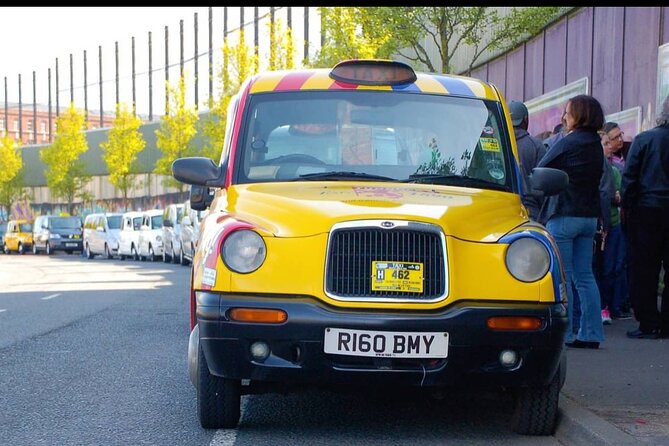
At $103.37 per person for about an hour, it is not the cheapest way to see Belfast. But it can be good value if you care about interpretation, not just locations. You are paying for a driver-guide who provides commentary as you ride, then time for you to step out at specific mural sites.
Think of it like this. You are paying for two things at once: transportation by black taxi and guided street interpretation. If you tried to do this alone, you could probably find the murals, but you would likely miss the personal, on-the-ground framing that makes the route click.
Also, the tour notes that admissions for the listed stops are free. That matters because it lets your money go toward the experience itself, rather than ticket stacking.
Still, be realistic. This is a tight schedule. If you want long walks, museums, or extended conversations at every site, you may feel rushed.
Meeting Point and Pickup: How to Start Smoothly
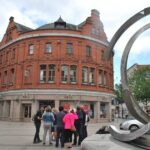
The tour start is at the Leonardo Hotel Belfast on Great Victoria St (BT1 6DY). If you want pickup, the service offers collection within a 1 km radius of Belfast City Hall front gates.
If you are arriving by cruise ship, this one has a specific limitation: it does not offer pickup from the cruise ship itself, since it is several miles outside Belfast city centre. The cruise shuttle drops you outside Visit Belfast, which is across the street from City Hall, so City Hall area pickup can be the easiest route.
My practical advice: when you book, double-check your pickup option and meeting wording. One real-world issue that can happen with tours like this is confusion about who is waiting where and when. A quick message ahead of time can save stress on a tight, one-hour timeline.
From Bobby Sands to the Peace Wall: The Stop-by-Stop Route
This itinerary is structured like a story with repeating themes. You visit the Bobby Sands areas twice, you spend time around Divis Flats and the International Mural Wall, then you move into monastery, peace-wall, and Loyalist-area murals. The result is a route that shows how the city’s memory is layered across neighborhoods.
More of the history, walked through:
Stop 1: Bobby Sands Mural, with multiple perspectives
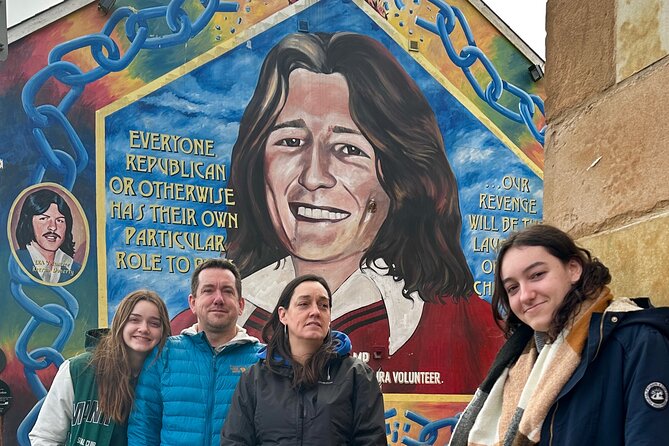
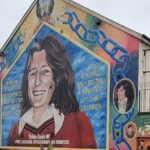
You start at the Bobby Sands mural and spend about 10 minutes here. The driver-guide frames what you are seeing in more than one political lens, including Republican and Loyalist versions, plus a British version, then a discussion of the truth as he understands it.
What I like about this setup is that it prepares you to notice details instead of forcing a single interpretation. Murals can look similar at a glance, but the symbols, wording, and memorial style often point to different identities and goals.
Tip for your photos: before you take the first shot, read the mural message at least once. If you only photograph quickly, you can miss the points the guide is emphasizing.
Stop 2: Divis Flats and the military role
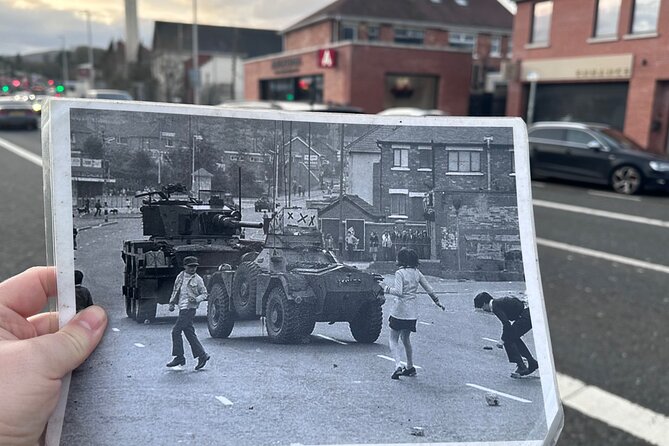
Next is Divis, with about 5 minutes on site. The key context here is that the Divis flats were used as an army base for over 25 years, with the top two floors of the top block serving in that role. You also hear about helicopters dropping supplies daily to British troops.
This stop is a good example of why short guided stops matter. From the street, the flats are just buildings. With the commentary, you start seeing the structure as part of a control system, not just housing.
A small caution: depending on how you feel about the subject, you might want to keep your phone and camera put away for a moment and just listen.
Stop 3: The International Mural Wall on Divis Street
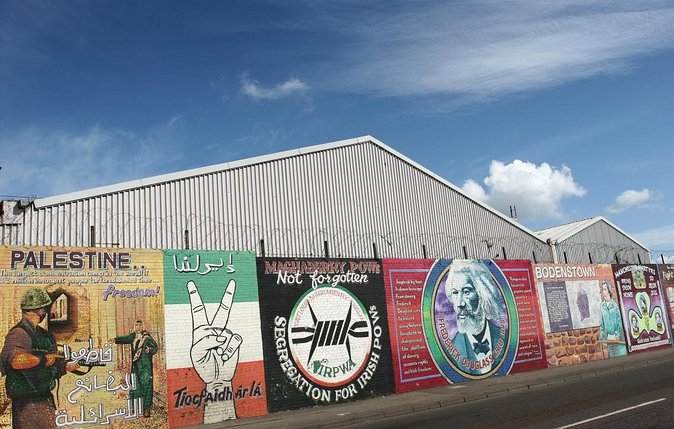
Then you move to the International Mural Wall on Divis Street for around 5 minutes. This wall is described as showing support for countries around the world without media attention, with over 40 murals linked to stories such as Cuban, Palestine, and Kurdish people.
What makes this stop interesting is the way it turns local conflict memory into a broader political language. Even if you came for Belfast, you end up thinking about how protest and solidarity travel between places.
Photo note: the murals here can be busy visually. It helps to use your camera’s grid or a steady stance so you do not end up with tilted frames of wall-text.
Stop 4: Bobby Sands Mural again, plus PIRA context
You return to Bobby Sands for another short stop, again around 5 minutes. This time you also hear about the Bobby Sands mural and his birthplace of the PIRA.
The guide’s framing here connects the Irish fight to British rule through a much longer sweep, described as 800 years of revolutions. That time jump is part of the emotional effect, because it makes The Troubles feel like one chapter inside a much bigger conflict story.
If you are feeling overwhelmed, take a breath during this portion. You can treat this stop like a reset, letting the guide’s timeline bring order to what you have already seen.
Stop 5: Clonard Monastery and secret talks
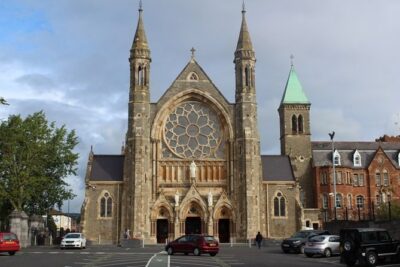
Clonard Monastery is next, with about 2 minutes there. The monastery was built over 100 years ago by local and Italian craftsmen, and it plays a notable peace-process role. The tour mentions secret talks between Gerry Adams and John Hume hosted by Father Alex Reid.
This is one of the quieter stops, and it can feel like the tour is exhaling. When you hear about those meetings in a real place, the peace process becomes more than a headline. It becomes a human story involving negotiation, risk, and trust-building.
If you care about how change actually happens, this is the stop to focus on with attention, not just photos.
Stop 6: The Peace Wall, Belfast’s long division
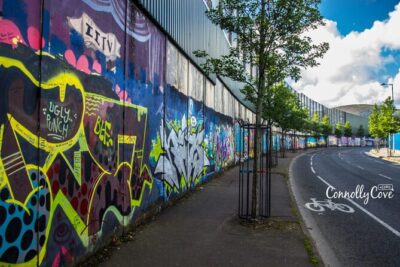
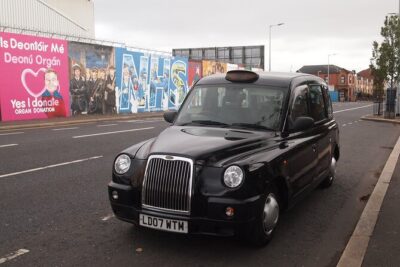
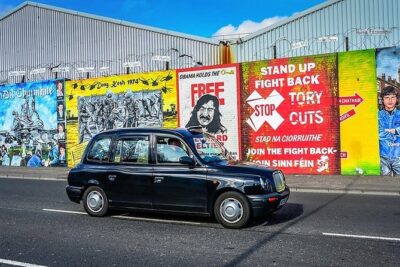
The Peace Wall is the major visual highlight, and you get about 13 minutes there. These Belfast peace walls were built over 50 years ago to divide Catholic and Protestant communities, and they stretch through the city.
You will also see peace messages written on them that are referenced as having quotes linked to figures like President Clinton, Lady Gaga, and Morgan Freeman. Whether those references show up as exact quotes or as symbolic mentions, the key point is that the wall has become a global canvas for peace language.
What I like about this stop is that it forces you to look at separation in a plain, concrete way. In a city with complicated politics, the physical wall simplifies the reality. It also raises a question you cannot ignore: what happens when a city has to keep reminding itself to be separate?
If you are photographing, look for angles that show both the wall length and the street context. A close-up of painted text is meaningful, but a wider shot tells more about why it exists.
Stop 7: Shankill Road and Loyalist murals
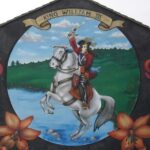
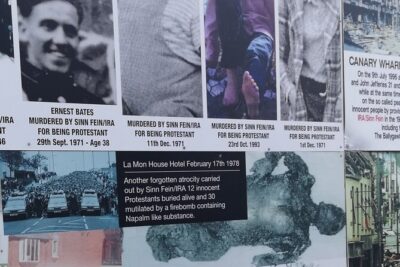
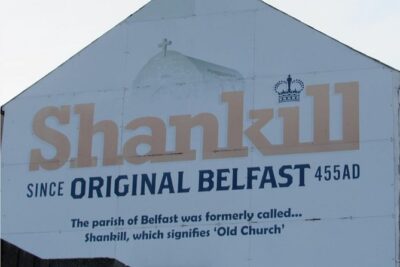
Finally, you head to Shankill Road for about 20 minutes. This area is described as the heart and birthplace of the UDA and UVF. The driver-guide explains the story through murals tied to 100s of years of British rule in Ireland and the loyal people of the crown.
This ending matters because it gives a different side of the conflict narrative. You do not leave with only one kind of story. You leave with a sense of how communities build identity around memory, symbols, and political loyalties.
A practical photo tip: on Shankill Road, spend a minute choosing your composition. Murals often sit within active streets, signs, and bus-stop clutter. A calmer shot looks better, even if you move slower.
The Driver-Guide Factor: Why This Tour Feels Different
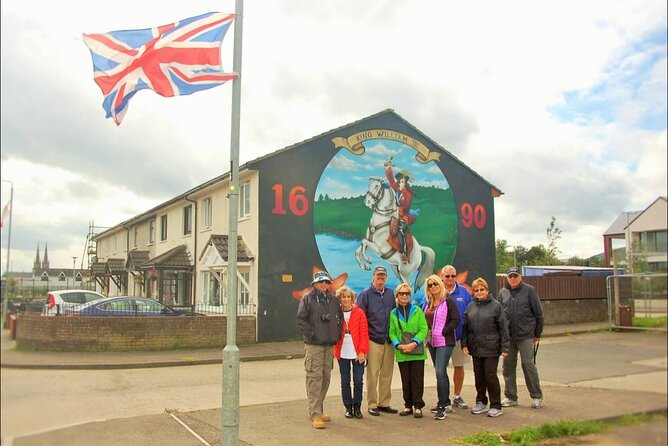
The tour’s strongest ingredient is the driver-guide. You hear personal stories about how the guide lived through The Troubles, and that changes how the route lands. Facts matter, but lived memory changes tone, pacing, and emphasis.
A key detail: one driver named Brian is mentioned as delivering standout commentary and knowledge. Even if you get a different driver, the format is designed around this idea of informed, firsthand context.
When this works well, you stop treating murals like images and start seeing them as messages aimed at neighbors, not tourists. You also start noticing how the same conflict can produce different interpretations, depending on which community’s experience shaped the telling.
Is there any drawback? Yes. If you are hoping for a neutral, purely academic walkthrough, personal storytelling can feel intense. You will get a point of view, and the route is clearly built to explain it.
Mural Etiquette and Photo Strategy (So You Get More Out of Each Stop)
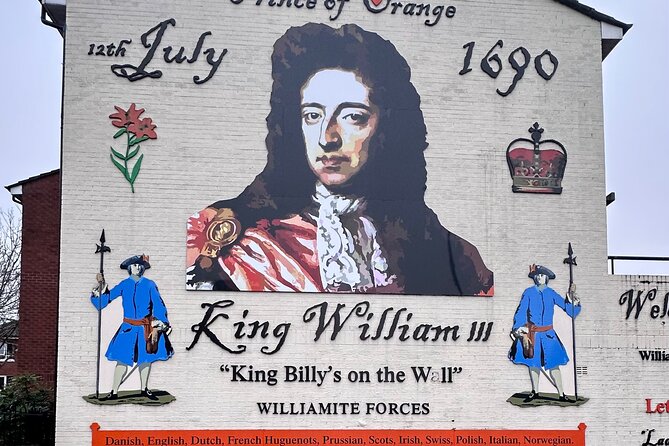
You only have a short window at each location, so you should plan your time at the stop itself. I recommend a simple method.
First, look. Spend 30 to 60 seconds reading what you can. Next, shoot one wide photo to capture context, then one tighter shot for the message elements. Finally, stand back and let the guide finish the context. That last step helps the photo make sense later.
Also, keep in mind that this is not just art. Some murals function like memorials and political statements. Treat the moment with respect. Lower your volume, pause your scrolling, and give the guide your attention for at least part of each stop.
Who This Tour Suits Best
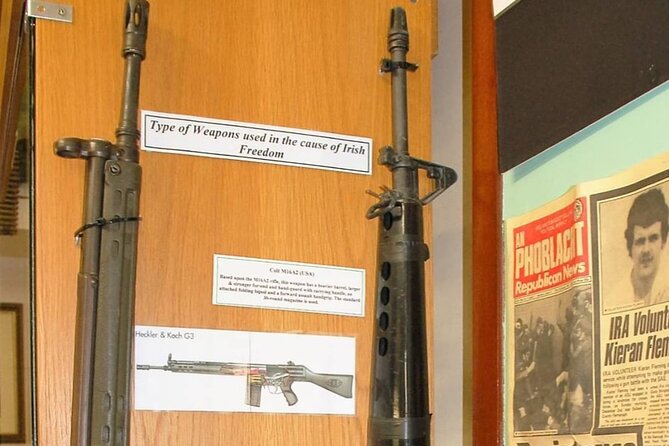
This one is a strong match if you:
- want a fast, guided way to understand Belfast conflict sites
- care about mural storytelling and street-level interpretation
- like taxi tours where the driver talks as you roll between stops
- are comfortable with serious historical and political themes
You might want to choose something else if you:
- want a long, slow pace with lots of walking and museum time
- prefer a light, purely scenic city tour
- get easily overwhelmed by emotionally heavy topics
The duration is short enough that you can pair it with other Belfast plans the same day, but it still asks you to mentally slow down when the subject turns hard.
Should You Book This Belfast 1-Hour Black Taxi Tour?
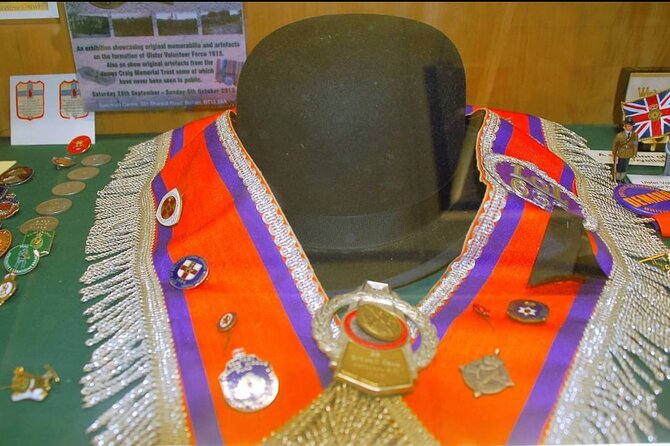
I think you should book it if your goal is clarity fast. The route connects murals, divided space, and peace-process context in a way that is efficient, human, and visually anchored. The $103.37 price looks fair when you factor in the guided commentary, the black taxi transport, and free access at the listed stops.
Do it if you want to leave with a better sense of how Belfast remembers. You are not just seeing landmarks. You are watching the city explain itself through walls, buildings, and stories.
Skip it only if you want a calmer, purely casual Belfast day. This tour is built for understanding a conflict, not for avoiding it. If you come ready for that, you will likely find it moving and genuinely informative.
FAQ
How long is the Belfast conflict and terror black taxi tour?
The tour lasts about 1 hour.
What is the price per person?
The price is listed as $103.37 per person.
Is pickup offered, and where do I meet?
Pickup is offered. The tour start is at the Leonardo Hotel Belfast on Great Victoria St, Belfast BT1 6DY. There is also a free pickup option within a 1 km radius from Belfast City Hall front gates.
Do cruise ships have pickup?
No. The tour does not pick up from cruise ships because the meeting area is several miles outside Belfast city centre. The cruise shuttle bus leaves you outside Visit Belfast, across from Belfast City Hall.
What language is the tour offered in?
The tour is offered in English.
Do I need to pay for admission at the stops?
The tour information states that admission ticket is free for the listed stops.
Is there a mobile ticket?
Yes, a mobile ticket is included.
Is free cancellation available?
Free cancellation is available. You can cancel up to 24 hours in advance for a full refund.
Are service animals allowed?
Yes, service animals are allowed.
An Hour Is Enough for These
- Private 1 Hour Belfast Taxi cab Tour★ 5.0 · 81 reviews
- 1 Hour Express Belfast Taxi/Cab Tour History, Murals, Troubles★ 5.0 · 17 reviews
Put up recently for Belfast
- Game of thrones -Giants causeway luxury tour 9 hrs 25 locations★ 5.0 · 1 review
- Private One-way Transfer From Belfast Int. Airport to Belfast★ 5.0 · 1 review
- CO2-Offset |Departure Belfast to BHD or BFS Airport by Luxury Van★ 5.0 · 1 review
- Enchanted Shores: Belfast to Giant’s Causeway★ 5.0 · 1 review
- SAY NOTHING 1 hr express taxi tour – The Troubles living history★ 5.0 · 1 review
- Belfast Troubles Walking Tour: A Journey Through History★ 5.0 · 1 review
Troubles Taxi Tours, compared.
Browse the lists this tour appears in