
Review · HISTORICAL TOURS
Belfast Troubles Walking Tour: A Journey Through History
You can see a divided city on foot. This Belfast Troubles walking tour links three key places in West Belfast, from the Loyalist murals on Shankill Road to the hard line of the Peace Wall, then over to the Irish nationalist murals on Falls Road. It runs about 2 hours 30 minutes, includes a guide, and keeps the focus on what the walls are saying, why they were made, and how people live with them today.
I especially like that the walk is guided by Tom, a flexible, no-rush kind of host who explains the conflict clearly and stays easy to talk with. I also like the pacing, with short, focused stops where you can actually look at the murals and memorials instead of just passing by. One consideration: this is a moderate walking tour, and you should plan for time outdoors as you move between neighborhood streets.
You start at Belfast City Council City Hall and end back at the same spot, so you are not stuck figuring out transit or timing at the end. And because it is private, up to 15 people, you get a calmer setting for questions and conversation, not a big herd shuffle. You get a mobile ticket, tour is offered in English, and service animals are allowed.
In This Review
- Key Things to Know Before You Go
- Why the Murals Matter More Than the Postcards
- The 2.5 Hour Route, From City Hall to Back Again
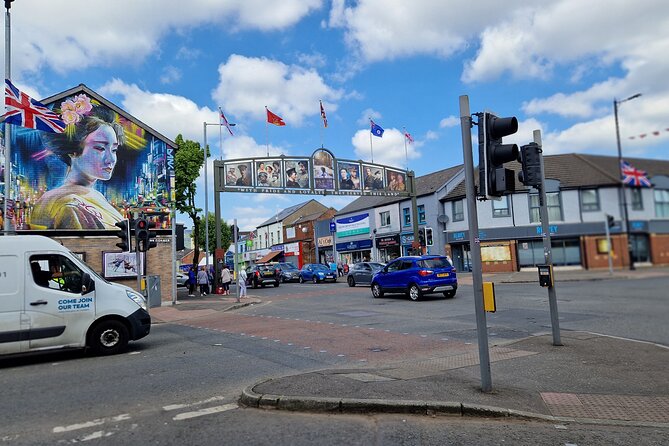
- Shankill Road: Loyalist Murals, Flags, and Memorials
- The Peace Wall Between Shankill and Falls: Gates, Murals, and the Night
- Falls Road: Nationalist Murals and the Memory of Bobby Sands
- What Tom Brings to the Walk (And Why It Changes the Value)
- Group Size, Private Format, and Why the Price Can Make Sense
- Practical Tips for This Belfast Walk
- Who This Tour Fits Best
- Should You Book the Belfast Troubles Walking Tour?
- FAQ
- Where does the tour start?
- How long is the Belfast Troubles walking tour?
- Is this tour private?
- How many people are included in one group?
- What language is the tour offered in?
- Is there an admission fee for the stops?
- Does the tour include coffee or tea?
- Is transportation included?
- What is the cancellation policy?
Key Things to Know Before You Go
- Shankill Road murals with Loyalist symbols that point straight to community identity and remembrance
- The Peace Wall still has gates that close at night, a physical reminder of separation
- Falls Road includes well-known memorial imagery, including a Bobby Sands mural
- Short stops that give you time to look, not just walk past
- Guide Tom is described as flexible and able to explain the Troubles clearly
- Admission at key viewing points is free, so your money goes to the guide and time
More of the history, walked through:
- A History of Terror – Belfast City Centre Walking Tour
★ 5.0 · 2,883 reviews - Private Political History & Murals Tour Belfast
★ 5.0 · 182 reviews - Belfast Political/history/troubles private taxi/cab tour
★ 5.0 · 69 reviews - Belfast Walking Tour: City Centre History, Troubles & Stories
★ 5.0 · 39 reviews
Why the Murals Matter More Than the Postcards
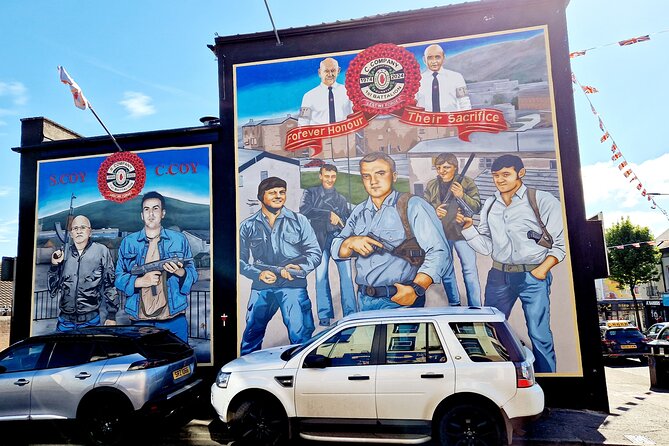
Murals in Belfast are not “decor.” They are communication. They record names, commemorate loss, and advertise beliefs, sometimes all at once. On this walk, you will see how each neighborhood speaks in its own visual language, with flags, slogans, portraits, and memorial pieces.
What I like about this kind of route is that it makes the conflict feel specific. Instead of reading abstract history, you watch symbolism change block by block. You also learn that the Troubles did not end cleanly, at least not in the way the city shows it. A wall, a gate, a mural, a memorial. These are how the past stays present.
The tour value is not only in what you see. It is in how a guide helps you read it without turning it into a spectacle. You are walking through real residential areas, with real community spaces, so the tone matters. A good guide keeps it balanced, so you understand why people honor what they honor, without you being pushed into one storyline.
The 2.5 Hour Route, From City Hall to Back Again
The tour runs about 2 hours 30 minutes, so you get enough time to notice details while staying practical for a day in Belfast. It is designed as a back-to-back neighborhood walk. You start at Belfast City Council City Hall, Belfast BT1 5GS, then return there at the end.
Expect the timing to feel like a sequence of short viewing periods. Each main location gets around 20 minutes, which is just enough to settle your eyes on the wall art, read memorial elements, and listen to the guide’s explanation. There is also a key transition segment built around the Peace Wall, which is the real “pause moment” of the walk, because it is where the geography of separation becomes obvious.
Because it is a private tour for your group, the pacing can be adjusted. That flexibility matters on an emotionally charged subject like this, where you might want extra time to look, or you might prefer to move a bit faster.
Shankill Road: Loyalist Murals, Flags, and Memorials
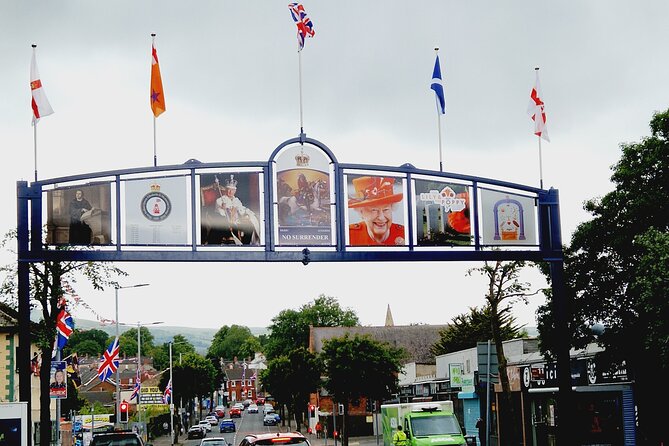
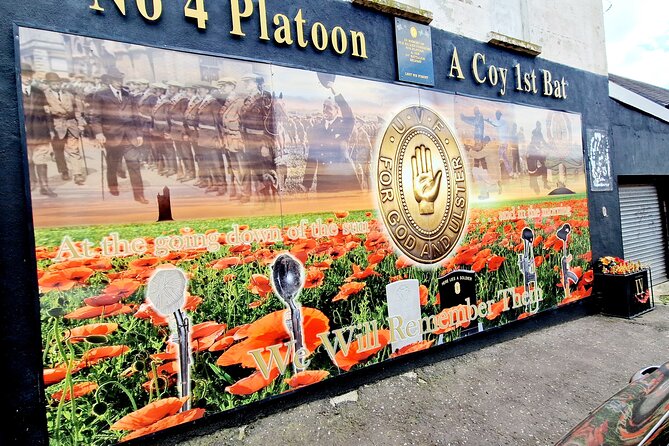
Shankill Road is where you start, and it is a sharp opening. You will see Loyalist murals that often reference British heritage and commemorate figures tied to the Troubles. Along the way, memorials honor people who were killed during the conflict, and the road is described as proudly home to a British, Unionist, Protestant community.
Practically, this stop works because the visuals are dense. If you only glance, you miss the point. But with a guide, you can connect what you are seeing to the bigger identity markers around it, like Union flags and other symbols that appear across the area. Those details are not random. They are part of how a community signals belonging and values, and how it remembers.
The key drawback here is also the key feature. The subject is contested. Some murals will feel like celebration to one side and like provocation to another. A guided walk helps you treat what you see as evidence of lived beliefs, not as a debate you have to win. If you are the kind of traveler who gets impatient with difficult topics, give yourself extra room for curiosity.
The Peace Wall Between Shankill and Falls: Gates, Murals, and the Night
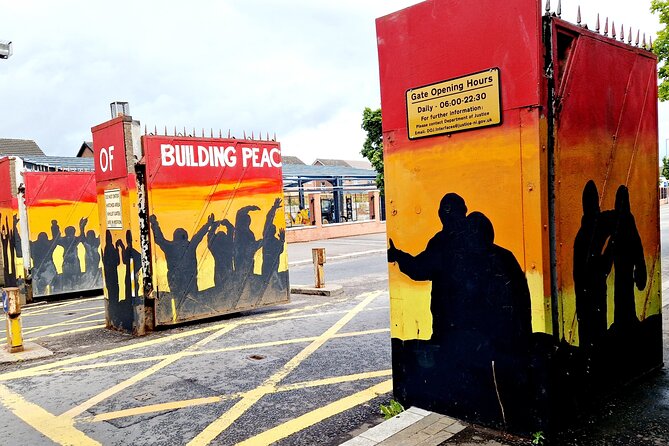
Then you reach the Peace Wall, built to separate Protestant Unionist and Catholic Nationalist communities during the Troubles. It is still there, and it remains one of the most concrete symbols of division in the city. The tour highlights something important that many visitors miss if they just hear “Peace Wall” as a concept: it still has gates that close at night.
That detail changes how the wall feels. It is not only a historic artifact. It is an active piece of infrastructure that shapes daily life. Even though the wall is covered in murals and messages of both conflict and hope, the gates make the separation feel immediate and real.
From a value standpoint, this stop is worth your time because it teaches you how to read the physical environment as part of the story. Street layout, barriers, and controlled access become part of memory. The murals layered onto the wall also show that people use art to argue with the past and with each other, while still living inside the same boundaries.
If you want a tip, it is simple: slow down here. This is the place where you will likely want to stand, look, and let the guide’s explanation settle before you move on.
More Walking Tours in Belfast
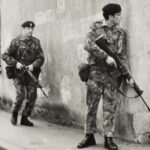



Falls Road: Nationalist Murals and the Memory of Bobby Sands
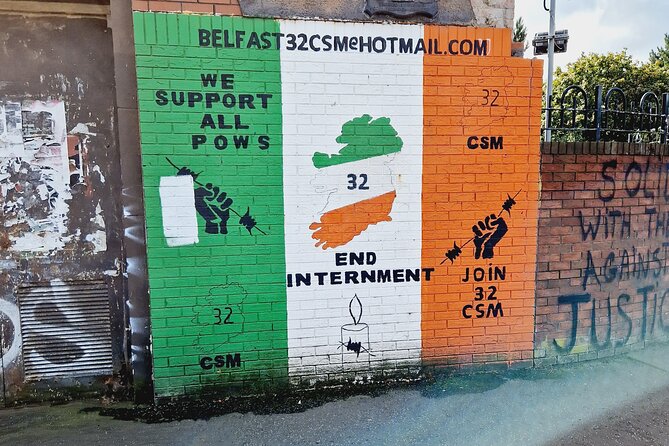
Falls Road is where the tour shifts in tone and community identity. You are now in an area known for the Irish nationalist, Catholic community in West Belfast. Like Shankill Road, it is marked by powerful murals and memorials, but the themes and symbols reflect a different side of the community experience.
One highlight the tour calls out is the famous image of hunger striker Bobby Sands. You will also see memorials to people lost during the Troubles. This stop matters because it shows how memorial imagery functions as both commemoration and message.
What I find useful for planning is that this part of the walk is structured around recognition. When you come in knowing at least one name or image, you can connect it to the neighborhood’s wider visual vocabulary. If you do not know any of it, that is fine. A guide can supply context so the murals are not just pictures, they are references.
A possible emotional consideration: memorial sites can hit harder than mural scenes that feel more like slogans. If you are sensitive to history that includes violence and imprisonment, plan to move at your own pace and ask questions if something feels unclear.
What Tom Brings to the Walk (And Why It Changes the Value)
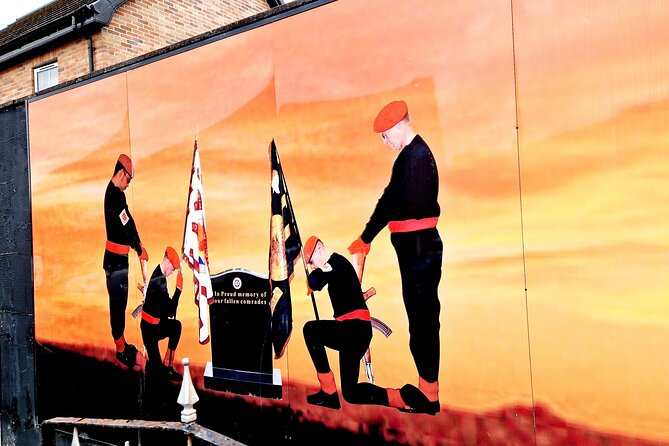
The strongest praise for this tour is about the guide. Tom is described as knowledgeable in a plain, clear way, easy to spend time with, and very flexible. That combination matters because the Troubles are complex, and murals can be hard to interpret without context.
A flexible guide also helps you feel human-scale in the experience. You are not just following a script. If a question pops up, you can likely ask it. If you need an extra minute to take in a mural, you are not punished for it.
This is one of those tours where how the guide speaks affects what you take away. The best version of this tour keeps the tone respectful and explanatory, so you understand why these images exist and what communities believe they represent. It also helps you avoid turning a walk through neighborhoods into a quick photo stop.
Group Size, Private Format, and Why the Price Can Make Sense
The price is $318.87 per group, up to 15 people. That means the cost does not scale the way per-person tours often do. If you are traveling with friends, or you can form a small group, the math can get very workable fast.
Think of it like this: you are paying for a guide and a focused route at street level. You are not paying for a museum ticket or a bus ride. The itinerary includes admission ticket free at the key viewing points, so your money mostly goes to the expertise and the time spent walking with context.
Duration is about 2 hours 30 minutes, so you are also getting a fairly long stretch of guided interpretation without the “half-day tour that feels rushed” problem. For many visitors, that is where the value shows up, because you do not just see sights, you learn how to connect them.
One caution on price value: if you are traveling solo or as a couple, the group-based pricing might feel high compared with per-person tours. That does not mean it is bad, it just means you should compare what you are actually buying: guided interpretation of three major political and memory hotspots.
Practical Tips for This Belfast Walk
You are moving through neighborhoods, so wear shoes that work for sidewalks and street-level walking. The tour is listed as requiring moderate physical fitness, so plan for a steady walk between stops.
Bring a phone that can handle a mobile ticket, since the tour uses a mobile ticket. Also plan your day around the fact that it is outdoors for parts of the route. Rain in Belfast is common in general life there, so layers can help, even if you think you will only need light clothing.
Coffee and tea are not included, so if you want a warm-up, plan that separately before or after. And while public transportation is near, the tour format is still a walking route, so don’t schedule your next activity too tightly right after the end.
Timing wise, the tour is listed as running Monday through Saturday from 10:00 AM to 4:00 PM during the stated date range. If you have flexible plans, choose a time that matches your energy. If you are arriving the same day, go for an earlier slot so you are not making your first day of walking harder than it needs to be.
One planning note: it is booked on average 127 days in advance. That is a strong sign this tour draws interest. If you want a specific day, start looking early.
Who This Tour Fits Best
I think this works best for travelers who like context and street-level meaning. If you enjoy learning how communities remember, protest, mourn, and signal identity, this route gives you concrete examples to study.
It also fits well if you want an authentic-feeling experience that is still structured. The tour format is built around guided viewing of Shankill Road murals, the Peace Wall, and Falls Road murals, so you get a cohesive narrative without needing to piece together directions yourself.
You might also like it if you are traveling with a small group and want a private setup. A group capped at 15 people is large enough to be social but small enough for discussion.
If you are traveling with someone who dislikes politically charged sites, this may still be doable, but you should go in with a respectful mindset. This walk does not try to avoid the conflict. It tries to explain it through what the city shows on its walls and barriers.
Should You Book the Belfast Troubles Walking Tour?
If your goal is to understand Belfast’s Troubles in a way you can actually see, then yes, I would book this tour. The route hits three major reference points in West Belfast, and the Peace Wall stop, especially with the detail about gates closing at night, makes the topic feel grounded.
I would also book it if you care about how the information is delivered. Tom’s described flexibility and ability to convey history clearly is exactly what you want for a subject that can otherwise turn into a rushed slideshow.
Book it with the right expectations: you are walking through contested memory spaces. It is not a casual sightseeing loop. It is a focused, guided look at murals and memorials that still matter to everyday life.
If that kind of experience appeals to you, this is one you will remember long after you leave the street corners behind.
FAQ
Where does the tour start?
The tour starts at Belfast City Council City Hall, Belfast BT1 5GS, UK.
How long is the Belfast Troubles walking tour?
It lasts about 2 hours 30 minutes.
Is this tour private?
Yes. It is a private tour or activity, and only your group participates.
How many people are included in one group?
The price is per group up to 15 people.
What language is the tour offered in?
The tour is offered in English.
Is there an admission fee for the stops?
The key viewing stops listed are free for admission, and the tour includes your guide.
Does the tour include coffee or tea?
No. Coffee and/or tea are not included.
Is transportation included?
No. Public transportation is not included, though the meeting area is near public transportation.
What is the cancellation policy?
You can cancel for a full refund up to 24 hours before the experience starts. Within 24 hours of the start time, no refund is given.
Put up recently for Belfast
- Game of thrones -Giants causeway luxury tour 9 hrs 25 locations★ 5.0 · 1 review
- Private One-way Transfer From Belfast Int. Airport to Belfast★ 5.0 · 1 review
- CO2-Offset |Departure Belfast to BHD or BFS Airport by Luxury Van★ 5.0 · 1 review
- Enchanted Shores: Belfast to Giant’s Causeway★ 5.0 · 1 review
- SAY NOTHING 1 hr express taxi tour – The Troubles living history★ 5.0 · 1 review
- Belfast’s Iconic Sites: A Self-Guided Audio Tour★ 5.0 · 1 review
Historical Tours, compared.
A History of Terror – Belfast City Centre Walking Tour
Read our review →
Private Political History & Murals Tour Belfast
Read our review →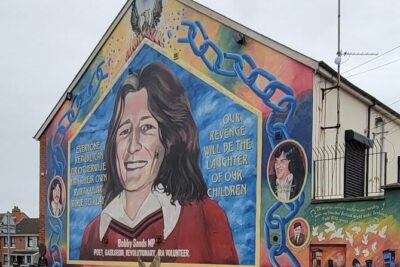
Belfast Political/history/troubles private taxi/cab tour
Read our review →
Belfast Walking Tour: City Centre History, Troubles & Stories
Read our review →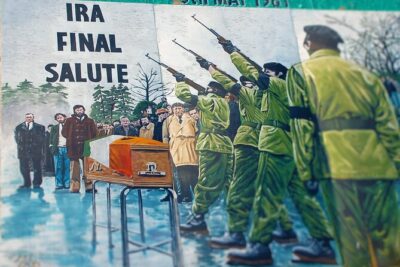
1 Hour Express Belfast Taxi/Cab Tour History, Murals, Troubles
Read our review →
Belfast political history and mural unique private 90 min tour
Read our review →
Belfast by the Glass: alternative history of Belfast, sip by sip.
Read our review →Browse the lists this tour appears in