
Review · TROUBLES TAXI TOURS
2 Hours Republican & Loyalist Mural Black Taxi Tour from Belfast
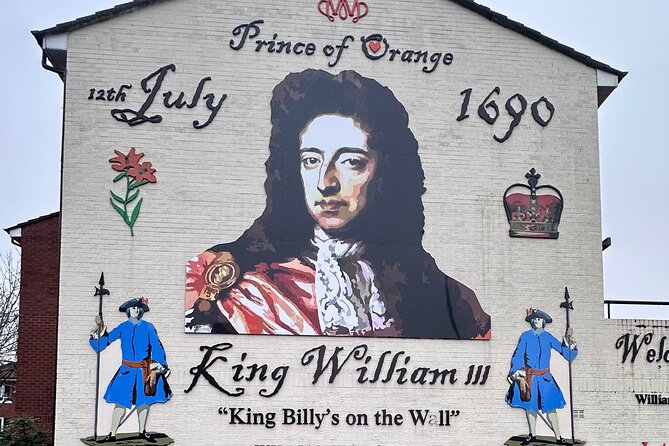
Belfast murals tell the story faster than books, and this 2-hour ride in a black taxi turns street art into a live lesson through personal stories from a driver who worked during The Troubles. I love that it skips the mental math of public transport, and I love the way it moves across both communities, from Republican sites to Loyalist walls. One thing to plan for: admissions are not included for the first two mural stops, so you may want a little extra money if anything requires a paid ticket.
You get a smooth flow of stops with enough time to look up close, plus it is timed well for a first visit. The Peace Wall moment is the one that lands, because you can actually sign your name or write a quote on the Berlin Wall-style panels, not just stare at them.
In This Review
- Key things I would zoom in on
- Enter Belfast on a Taxi, Not a Timetable
- Guides With Troubles-Era Stories (and time for your questions)
- Price and value: what $103.06 really covers
- International Mural Wall on Divis Street: global headlines, painted large
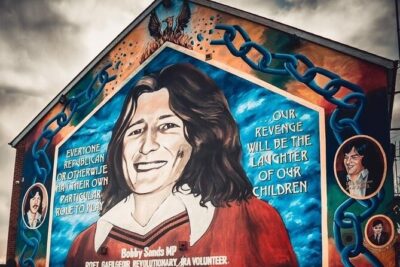
- The Bobby Sands Mural: a single face with many layers
- Falls Road Library photo stop: the H-Block statue and a quick pause
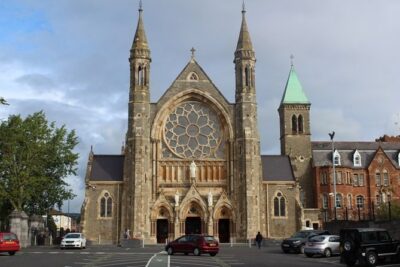
- Clonard Monastery: peace talks, secret meetings, and changed directions
- Shankill Road walk: Loyalist murals, UVF-UFF context, and a tougher kind of listening
- Peace Wall Taxi Tours: 25 km of separation, plus the chance to write on your own panel
- How to get the most from the route (and stay respectful)
- Who this taxi tour is best for
- Should you book this Republican and Loyalist Mural Black Taxi Tour?
- FAQ
- Where does pickup happen for this tour?
- Do I need to find a meeting point?
- Is the tour in English?
- What is the duration and group size?
- Are admission tickets included for the stops?
- Are service animals and children allowed?
Key things I would zoom in on
- Taxi-first, pickup-first: you start in Belfast center and avoid figuring out buses or walking long distances on your own.
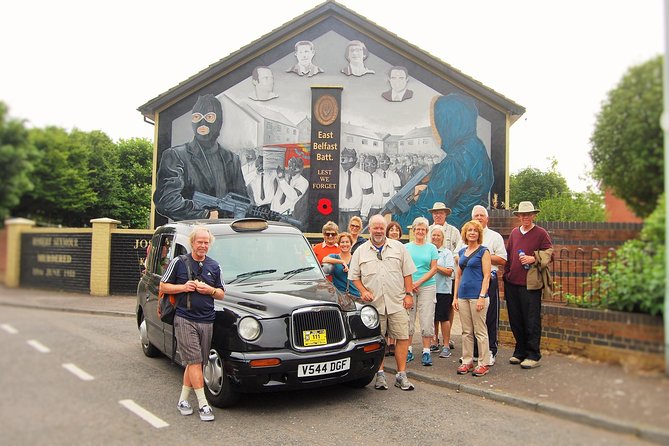
- Troubles-era perspective: you hear personal stories from a driver who worked through the conflict years.
- Both sides in one route: murals and memorials on the Republican side, then Loyalist murals on the Shankill.
- Photo-friendly stops: outside views and short photo breaks make it easier to keep moving without museum fatigue.
- Peace Wall with your mark: sign or write on the Berlin Wall-style panel for a hands-on reconciliation moment.
- Small group size: maximum of 15 people means you can ask questions and not get lost in the crowd.
Other black taxi runs through the Troubles sites:
- Cab Tours Belfast Famous Black Taxi Tours
★ 5.0 · 3,633 reviews - Private Black Taxi Belfast City Tour
★ 5.0 · 2,188 reviews - Belfast’s Political Mural Taxi Tour
★ 5.0 · 1,180 reviews - Belfast black taxi tours
★ 5.0 · 1,166 reviews
Enter Belfast on a Taxi, Not a Timetable
This is one of those Belfast experiences where the vehicle does more than just move you. A black taxi ride is comfortable, direct, and quiet enough that you can actually listen when the guide starts connecting the murals to what was happening on the ground.
Pickup is the big practical win. You get picked up from within 1 km of Belfast City Hall, and the operator notes you can be collected at the City Hall front gates. That means you are not spending your limited time hunting for a bus route or timing a connection.
It is also a small-group format, with a maximum of 15 travelers. In a place like Belfast, that matters because you will likely have questions, and small groups make it easier to get a real answer instead of a generic one.
Guides With Troubles-Era Stories (and time for your questions)
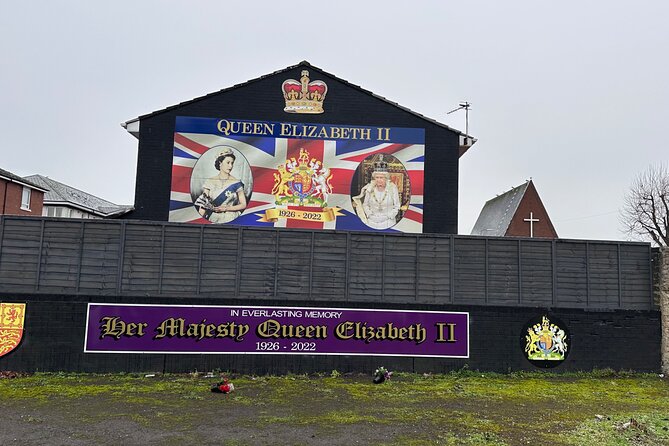
The tour’s standout ingredient is the driver perspective. You hear stories from a taxi driver who worked during The Troubles. That kind of firsthand framing changes how murals land. Instead of treating the walls like posters from a textbook, you hear how everyday movement, work, and risk shaped ordinary life.
From past tour experiences, several guide names come up again and again, including Ricki, Jarrod, David, Brendan, and Jim. The common thread in the praise is straightforward: guides are strong on local detail, they are friendly, and they are willing to answer questions instead of brushing you off. One guide approach I really like for this topic is the one that tries to cover both sides objectively, because it helps you understand the logic people lived with, even when you do not agree with it.
If you can request a guide, ask for Ricki. That recommendation shows up repeatedly, and the reason is practical, not hype: sharp local knowledge paired with a real willingness to talk.
Price and value: what $103.06 really covers
At $103.06 per person for about 2 hours, the value is mostly about what you are buying, not just the number.
You are paying for:
- A black taxi experience, not a shared bus shuffle
- City center pickup within 1 km of Belfast City Hall
- A guided route that strings together Republican and Loyalist mural sites plus the Peace Wall
- Small-group handling (max 15)
- An English-speaking guide
- A mobile ticket
What is not included is also important. Admission tickets are not included for the first two stops, and the rest are marked free in the tour plan. So, you should treat the price as covering the transportation and guidance, then budget a bit for any paid entry at those specific mural locations.
Also note the booking pattern: it is commonly booked about 21 days in advance on average. If your dates are tight, it is smart to book early rather than hoping for last-minute availability.
International Mural Wall on Divis Street: global headlines, painted large
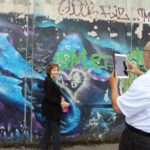
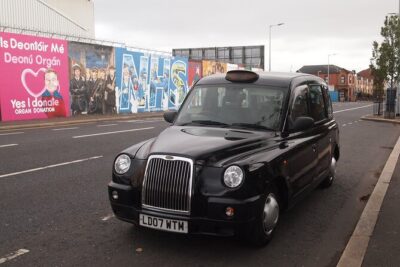
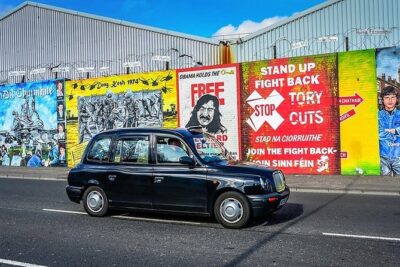
The first stop is the International Mural Wall on Divis Street. This is the kind of place where street art feels like a living newspaper. The wall includes about 40 different murals, and it changes with world news, which means the site is always updating what it chooses to highlight.
You will see world murals that connect Northern Ireland to wider conflicts and movements, including themes like Palestine/ANC/Cuba, plus a Republican hand-painted mural style done by local artist(s). That mix helps you understand something key about Belfast: even when the Troubles were local, the symbolism was not. People read the conflict through a broader political lens.
Timing is about 20 minutes. That is enough to get your bearings, take photos, and read the bigger details. It is not enough to slow down for every small corner, though, so come with a plan. If you love murals, spend your time on the scenes that show people and slogans, not only the color.
Practical note: admission tickets are not included here, so if there is anything you are expected to pay for at the site, you will need to handle it on your own.
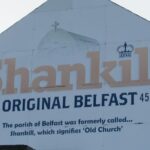
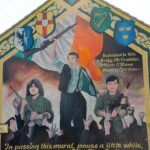
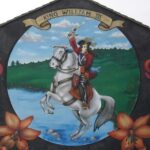
More gable walls and painted ends:
The Bobby Sands Mural: a single face with many layers
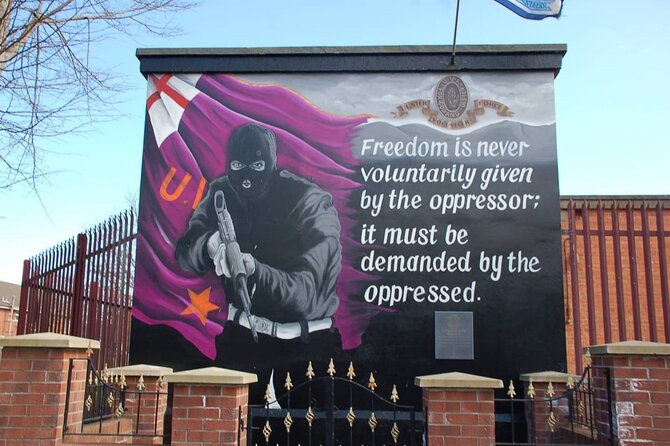
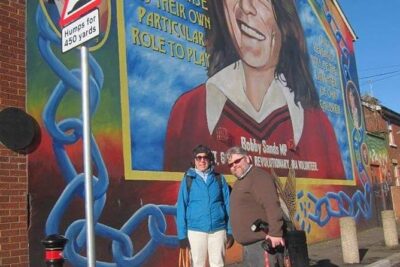
Next comes the Bobby Sands Mural, set in Belfast as an iconic representation of Bobby Sands, known as an IRA volunteer, hunger striker, and MP, and an influential figure in Irish Republicanism.
This stop is only about 20 minutes, but it is the kind of 20 minutes that changes how you view the rest of the route. A mural like this is not just art. It is memory, identity, and political symbolism all at once, and guides usually use the time to explain what makes the image so significant to people on that side of the story.
Admission is also not included for this stop, so again, treat it as a guided visit plus any site-specific fees you might encounter.
If you are new to The Troubles, keep your expectations realistic. You will not leave with every political detail solved. Instead, you will walk away with a stronger map for how names, memorials, and slogans function in Belfast street life.
Falls Road Library photo stop: the H-Block statue and a quick pause
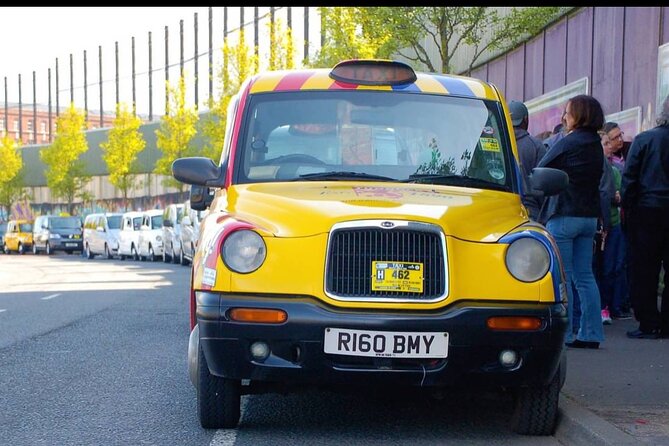
You then shift to the Falls Road area, stopping at Falls Road Library for photos outside the Republican remembrance garden and the massive H block hunger strike statue.
This is a short stop, about 10 minutes, and the plan says admission is free. I like these kinds of quick photo breaks. They prevent the tour from turning into a marathon, and they let you reset before you move into a different neighborhood and a different narrative emphasis.
What makes this stop worth your attention is the visual power of the H-block reference. A statue and a remembrance garden work like a shortcut to emotional context, even if you do not know all the dates yet. The guide’s explanations help you connect the symbol to the lived reality behind it.
Clonard Monastery: peace talks, secret meetings, and changed directions
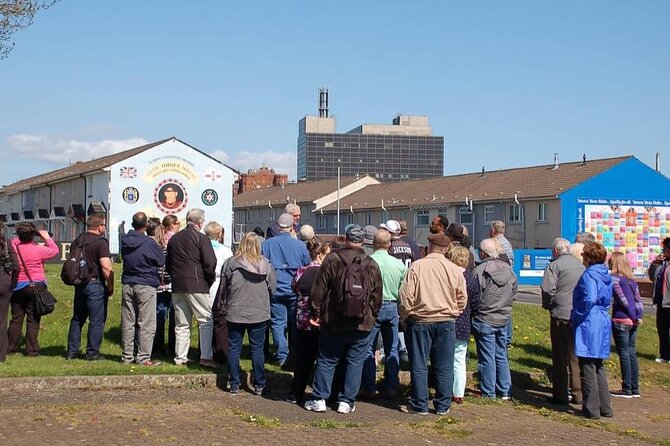
Clonard Monastery is next, with about 10 minutes planned and free admission. The tour description focuses on how Clonard Monastery played a major part in the peace process, including being a place where political leaders met in secret before there was a framework for the public.
This is one of the moments where the tour moves beyond “what happened” and starts leaning into “how things started to change.” Murals show conflict and identity. A monastery stop like this points to negotiation and the quieter side of history that does not always get the same attention as protests or violence.
Because the stop is brief, you should stay present rather than trying to read everything at once. If your guide offers context, let it land, then take your photos and keep moving.
Shankill Road walk: Loyalist murals, UVF-UFF context, and a tougher kind of listening
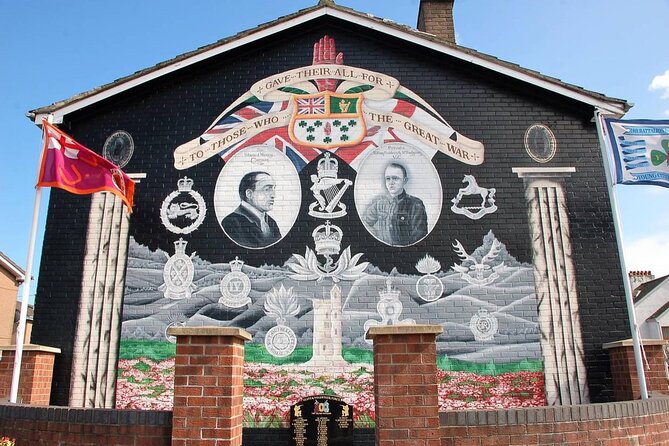
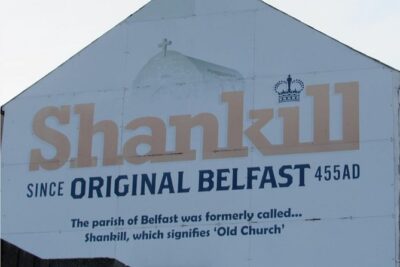
After the monastery, the biggest block of walking time is on Shankill Road. The plan gives about 40 minutes, and admission is free.
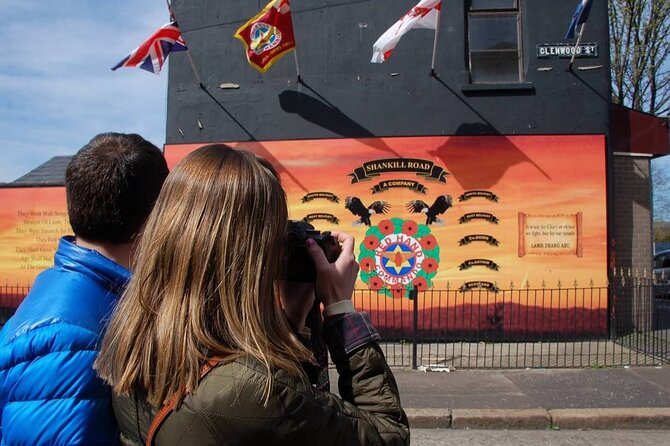
Here, the tour shifts to Loyalist themes. You will have the chance to learn about 900 years of British rule in Ireland and how the people from the Shankill fought to remain British. The route also references UVF and UFF, and you will hear guidance about peace and the future of all our children.
This stop is mural-heavy, with Loyalist murals painted on cable walls of houses. That matters because the texture of these murals is different from what you see at larger, more visitor-friendly walls. They feel more integrated into daily life, which can make your experience more intense, not less.
A detail that adds weight is that, while you walk through the Shankill, you will also see an old Victorian jail that housed both Loyalist and Republican together over 30 years during The Troubles. Even if you do not go inside, the fact that both sides were held in the same place is a hard reality-check for anyone thinking of conflict as two perfectly separate worlds.
My practical advice here is simple: move slowly, watch your footing, and be ready to hear explanations that are firm and specific. This is not a neutral “everything is equal” route, but it also is not meant to turn you into a spectator at a museum. It is meant to help you understand how people made sense of their community.
Peace Wall Taxi Tours: 25 km of separation, plus the chance to write on your own panel
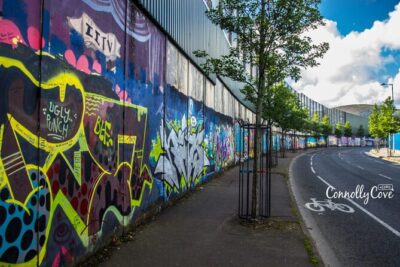
The final named highlight is the Peace Walls, introduced as stretching over 25 km across the city. The tour frames them as imposing structures that physically separate communities in Belfast and serve as a reminder of troubled history and ongoing reconciliation efforts.
This stop runs about 20 minutes and is marked as free. It also includes a hands-on moment: you have a chance to sign your name or write a quote on the tour’s Berlin Wall-style panel.
That activity is more meaningful than it sounds. It moves the Peace Wall from an object you look at to something you respond to. You are basically saying you were there and you chose not to turn away.
If you are hoping for the “wow” factor, this is the place where you usually feel it. It is not just architecture, it is a physical record of separation and a visual prompt for what reconciliation requires.
How to get the most from the route (and stay respectful)
This kind of Belfast tour asks you to listen more than you click photos. You will get a strong dose of symbolism: murals for identity, statues for memory, walls for separation, and buildings for negotiation. Your best strategy is to treat the guide like your translator, not your debate opponent.
A few things that help:
- Ask follow-up questions when something feels unclear, especially about names and what they represent
- Keep your tone calm in the moments that feel personal to you or to the people living there
- Expect direct explanations, not watered-down talking points
- Remember that “both sides” does not mean “both sides are the same,” it means the route tries to explain logic and lived experience rather than only blame
Because the group is small, you might also get your interests folded into the discussion. Past experiences with guides like Jim and David highlight how tailoring the route content can make the information stick.
Who this taxi tour is best for
I think this tour fits best if you are:
- Visiting Belfast for the first time and want a tight 2-hour framework
- Interested in street art as political storytelling
- Want the comfort and speed of a black taxi instead of figuring out transit
- The type who likes asking questions and getting straight answers
It is not the best choice if you want a long museum-style pacing or a purely light sightseeing day. This route is designed to focus on The Troubles and how the city remembers it.
Should you book this Republican and Loyalist Mural Black Taxi Tour?
Yes, you should book it if you want a smart, guided first look at Belfast’s most talked-about visual landmarks, with pickup from City Hall and no meeting-point stress. The small group setup and the driver perspective from The Troubles years make the experience feel less like a checklist and more like an education you can actually talk back to.
I would hesitate only if you dislike hearing about political conflict, or if you are not comfortable with some sites that note admission tickets not included. If that is you, you can still go, just plan to handle any paid entries on your own.
One more practical check: if you are arriving by cruise ship, pickup from the cruise ship port is not offered, but the cruise shuttle bus drops you outside Visit Belfast, across from City Hall. From there, you can arrange collection at the City Hall front gates.
FAQ
Where does pickup happen for this tour?
Pickup is offered from Belfast city center within a 1 km radius of Belfast City Hall. The operator also notes you can be collected outside Belfast City Hall front gates.
Do I need to find a meeting point?
No. The tour includes pickup from Belfast center within the 1 km radius of City Hall, so you do not need to go to a separate meeting point.
Is the tour in English?
Yes. The tour is offered in English.
What is the duration and group size?
The tour is approximately 2 hours. It has a maximum of 15 travelers.
Are admission tickets included for the stops?
Admission tickets are not included for the International Mural Wall and the Bobby Sands Mural. The other stops listed have admission marked as free.
Are service animals and children allowed?
Service animals are allowed. Children must be accompanied by an adult.
About Two Hours, Start to Finish
- 2 hours Belfast Original Drivers The Troubles Black Taxi Tour★ 5.0 · 227 reviews
- World Famous Belfast City Centre Black Cab/Taxi Tour 2 Hours★ 4.5 · 177 reviews
- Original Private Belfast Troubles and Peace Cab/Taxi Tour 2 Hours★ 5.0 · 90 reviews
Put up recently for Belfast
- Game of thrones -Giants causeway luxury tour 9 hrs 25 locations★ 5.0 · 1 review
- Private One-way Transfer From Belfast Int. Airport to Belfast★ 5.0 · 1 review
- Enchanted Shores: Belfast to Giant’s Causeway★ 5.0 · 1 review
- CO2-Offset |Departure Belfast to BHD or BFS Airport by Luxury Van★ 5.0 · 1 review
- SAY NOTHING 1 hr express taxi tour – The Troubles living history★ 5.0 · 1 review
- Belfast Troubles Walking Tour: A Journey Through History★ 5.0 · 1 review
Troubles Taxi Tours, compared.
Browse the lists this tour appears in