
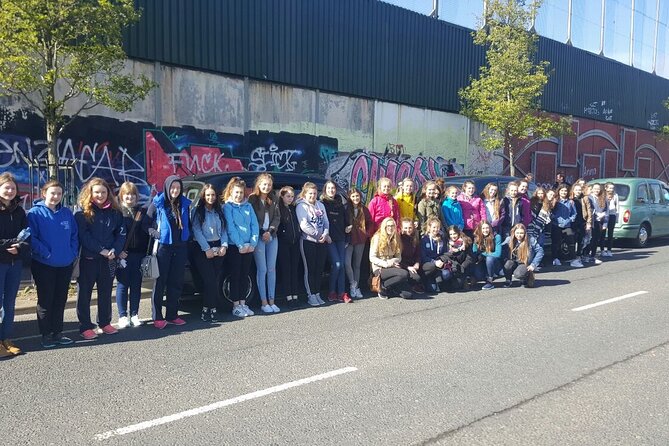
Review · TROUBLES TAXI TOURS
Express Terror and Peace 90 min Private Belfast Cab /Taxi Tour
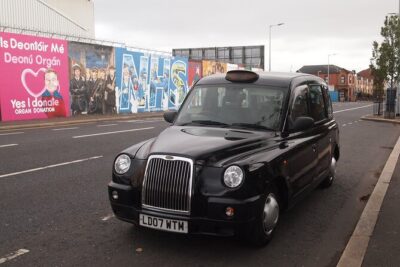
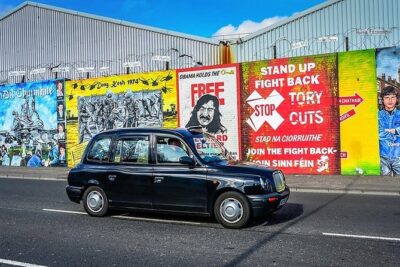
Belfast history hits different from the back seat. This private taxi tour mixes politics, street art, and key places from the Troubles, so you learn fast without feeling lost. You even get the city’s most famous murals, including the Bobby Sands mural, while riding between neighborhoods.
Two things I really like about this experience are the pace and the perspective. You cover more ground than a walking tour, but you still stop often enough to look closely at what matters. And the best guides, like Jim, turn the ride into clear background plus real nuance about what shaped today’s Belfast.
One thing to consider: the subject matter is heavy. You’ll pass through sites tied to imprisonment, attacks, and hunger strikes, so this is not the kind of tour you take when you want light entertainment.
In This Review
- Key things to know before you go
- Belfast by taxi: why this route makes the Troubles make sense
- Price and value: what $178.26 buys you
- Divis Flats to the International Mural Wall: start where tension began
- Bombay Street and the Falls Road Library: hunger strikes and public memory
- Clonard Monastery and the Peace Wall: where quiet agreements changed everything
- Crumlin Road Gaol and Courthouse: terror has a building, not just a name
- Shankill Road and Shankill Graveyard: loyalist murals, old streets, July bonfires
- How the guide, especially Jim, makes or breaks the ride
- Who should book this Belfast cab tour, and who should skip it
- Should you book Express Terror and Peace?
- FAQ
- How long is the Express Terror and Peace private Belfast cab tour?
- Is this tour private or shared?
- Where does pickup happen?
- Do you pick up from cruise ship ports?
- What if I need a pickup from an airport or train station?
- Are tickets needed or paid for at the stops?
- What language is the tour in?
- Are children allowed?
- What is the cancellation policy?
Key things to know before you go
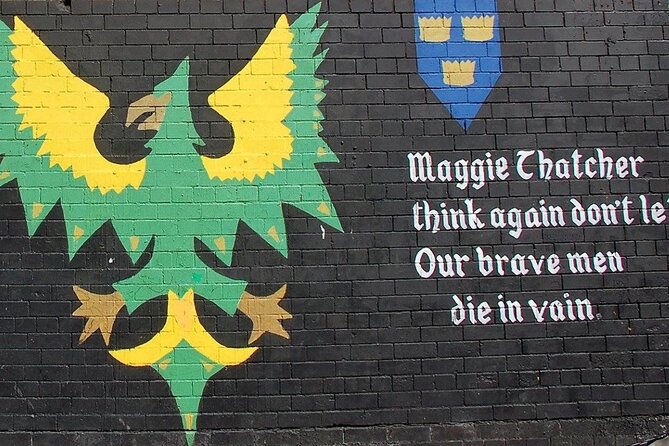
- Private taxi time means you and your group set the tempo, and you do not have to share the experience with strangers.
- Murals as lessons: the International Mural Wall and the loyalist side of Belfast show how messages change across time and communities.
- Real political landmarks: you visit places tied to the Troubles era, including sites connected to Bobby Sands, Gerry Adams, and John Hume.
- Peace markers that still work: the Peace Wall is not just a photo stop, you get the story behind why the messages still matter.
- A guide like Jim helps it click: the ride is built around context, not just names and dates.
Other black taxi runs through the Troubles sites:
- Cab Tours Belfast Famous Black Taxi Tours
★ 5.0 · 3,633 reviews - Private Black Taxi Belfast City Tour
★ 5.0 · 2,188 reviews - Belfast’s Political Mural Taxi Tour
★ 5.0 · 1,180 reviews - Belfast black taxi tours
★ 5.0 · 1,166 reviews
Belfast by taxi: why this route makes the Troubles make sense
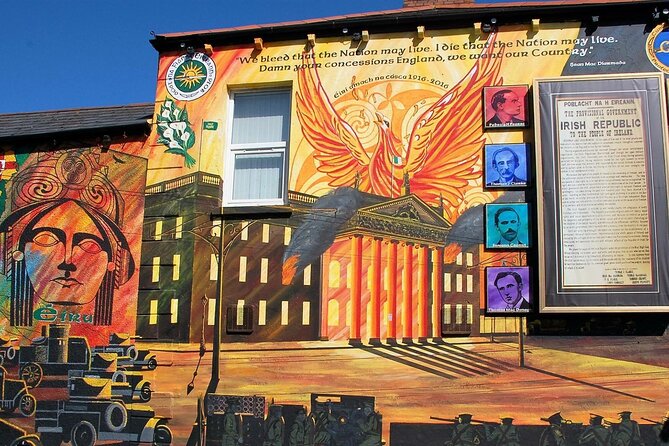
The Troubles in Belfast can feel like a maze. Streets look close on a map, but the history between them is big, and if you try to piece it together on your own, you can end up memorizing facts without understanding the cause and effect. This private cab tour works because it treats the city like a story, with movement between chapters.
You start with neighborhood context and street-level symbolism. Then you move to places where political struggle became public, permanent, and sometimes deeply personal. The murals are a big part of the payoff, but they do not float in isolation. A good guide connects them to what happened nearby and why people remember it differently.
Because it is taxi-based, you avoid the most common problem with self-guided sightseeing in Belfast: you spend energy walking between stops while the important bits happen on the other side of the street. Here, you get road access, short stops, and the chance to actually look. Even the timing feels designed for your attention span, enough time to read and take in a scene without turning the tour into a sprint.
Price and value: what $178.26 buys you
At $178.26 per person, this is not a casual bargain, but it can still be good value if you care about context. You are paying for a private experience, not a bus ride. Private matters in places where the story can get complicated fast. You can ask questions and adjust the pace without feeling rushed by the group behind you.
You are also paying for a guide who can connect the visible landmarks to the behind-the-scenes reality. The strongest feedback centers on guides who explain background, then add nuance about today’s socio-political situation. That is the difference between seeing murals and understanding why they exist, and why people still talk about them.
There is also the practical value of the route itself. A taxi tour that hits major points in about 2 hours (approx.) is efficient. You still get multiple stops, including ones with free admission tickets at each location. So you are not paying extra fees just to stand in front of the next wall and move on.
If you want a quick overview before a longer stay, or if you want to avoid the guesswork, this price can be easier to swallow. If you already know a lot and just want photos, you might feel it is too pricey for the time. I’d use this tour as your foundation, then explore from there at your own rhythm.
Divis Flats to the International Mural Wall: start where tension began
You begin near the Divis Flats area, at the start of the Falls Road mouth. This is the kind of place where a map does not tell you what you need to know. The area links to the riots of 1966 that helped shape what later became known as The Troubles. One detail that helps make it real is that the British Army occupied the area for decades, continuing until 2007. You see how long-term control can leave scars that last well beyond the uniforms.
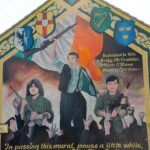
From there, you move toward one of Belfast’s mural engines, the International Mural Wall on Divis Street. This wall is known for having over 60 murals that change with global events. You might see references that connect Belfast to places far away, like Nelson Mandela, Ukraine, and Palestine. That global thread matters because it shows how local identity and international politics can collide on the same brick.
This stop also gives you a chance to practice a useful way of looking. The murals here are not trying to be neutral school posters. They highlight more than one side of the story, and a guide can help you notice what is being emphasized. The point is not to pick a side for the afternoon. The point is to recognize how communities communicate through imagery when normal channels are broken.
One small drawback of this kind of mural-heavy route is that you have to pay attention with your feet and your eyes. Even with taxi time, you will be standing and looking at close range. If you want a very relaxing sightseeing day, balance this tour with something lighter after.
Bombay Street and the Falls Road Library: hunger strikes and public memory
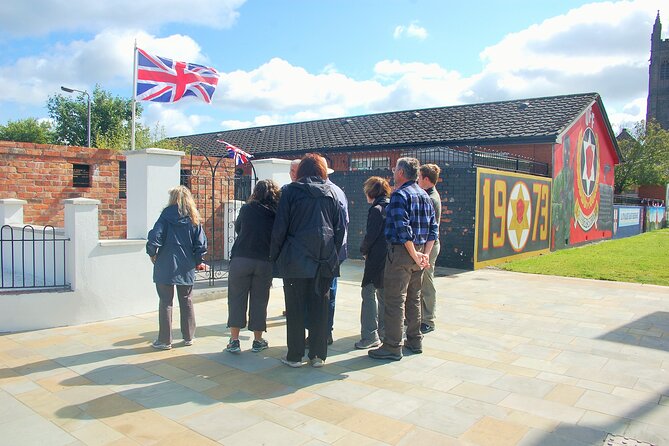
The next shift is toward a street tied to the birth of armed politics. Bombay Street is described as the official birth place of the Provisional Irish Republican Army, emerging out of the chaos around 1969, when thousands were displaced after burnings associated with police and loyalist forces. That sounds like a textbook sentence, but when you see the surrounding blocks, the phrase official birth place lands differently. It stops being abstract.
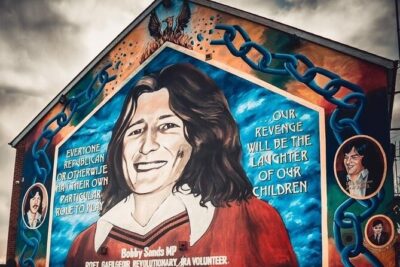
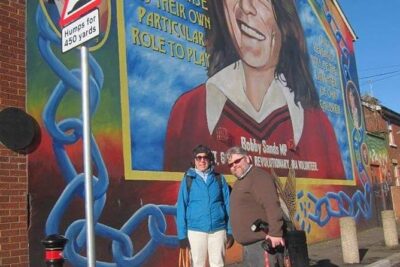
After that, you head to the Falls Road Library, where one of the most powerful parts of the whole tour lives in plain sight: the connection to Bobby Sands. You are guided through the 1981 hunger strike and the way this moment turned an individual into a symbol. The library area is also tied to older policing history, including a former RIC and Black and Tans station. In other words, the building area carries layers, not just one event.
The hunger strike story matters for the broader Belfast narrative because it shows a kind of strategy that did not rely only on weapons. It relied on attention, sacrifice, and pressure. And that is exactly why murals remain so prominent today. They keep the memory active in public space.
You get something useful here that many tours skip. You are not just shown a wall with a name. You are walked through why the story became so durable, and why it can still trigger strong reactions. Expect the conversation to feel respectful but direct.
If you are visiting with kids, this stop may be a lot emotionally, even though the time is short. A good guide can sometimes steer things to what is age appropriate, but you should still consider how sensitive your group is to political violence and protest stories.
Other Belfast outings worth a compare

Clonard Monastery and the Peace Wall: where quiet agreements changed everything
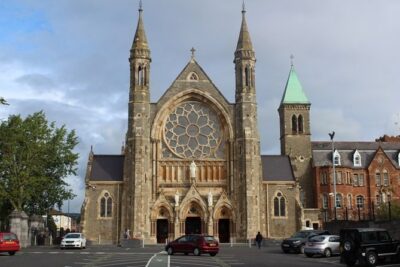
After the heavy stories on the Falls side, the tour turns toward a place associated with negotiation and faith. Clonard Monastery hosted secret peace talks between Gerry Adams and John Hume. That alone is a big deal. But what makes it memorable is the detail that the monastery was later discovered to have been bugged by MI5. So even at the moment when leaders tried to move toward peace, surveillance hovered in the background.
Then there is the altar detail that feels almost impossible until you hear it: it is made up of local women’s wedding rings. That is not just a quirky fact. It’s a reminder that peace efforts are personal. They pull in families, sacrifice, and everyday life, not only politicians and press conferences.
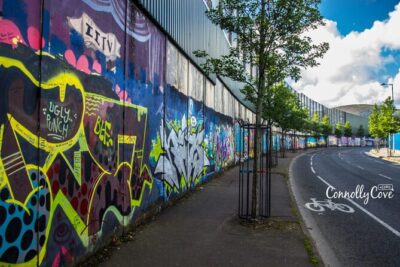
From there you visit the Peace Wall, where massive walls still remain across the city. You learn they were first put up in 1969 by the British Army, and you see how physical barriers become permanent symbols. This is not a wall you can treat like street furniture. People write their peace messages on it, including presidents, stars, and tourists. The presence of visitors matters because it shows the wall is now also an international canvas, not just a local marker of separation.
If you do not read the messages carefully, you might miss the emotional rhythm. With a guide, you typically get the sense of why those scribbles matter and why the wall continues to do its job in the public imagination, even when the political situation changes.
A practical note: these stops can generate a lot of photos. If that is your priority, tell your guide upfront. You can still take pictures, but you will want time to read key context first, otherwise the photos turn into a scatter of images without meaning.
Crumlin Road Gaol and Courthouse: terror has a building, not just a name
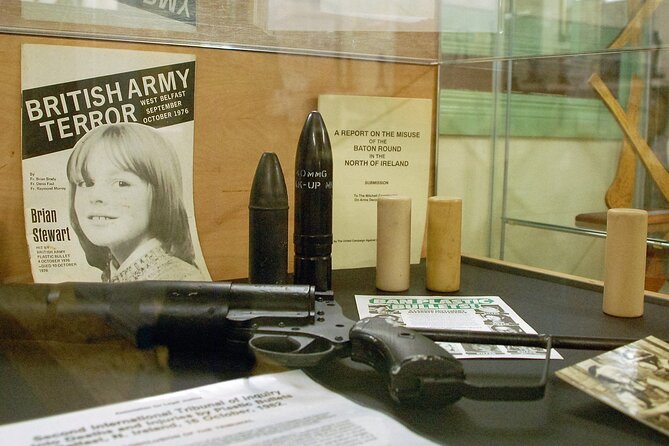
One of the standout stops is Crumlin Road Gaol and Courthouse. This place has seen IRA successful escapes and RPG attacks during the Troubles. You also get a sense of the scale from the building itself, built in the 1800s, and used as a hanging jail up until the 1960s.
There is something about a jail that makes history physical. You are not just looking at an event, you are looking at architecture designed for confinement and punishment. Even without going into every detail, the setting tells you what authorities built to control people and keep order, then how resistance shaped what happened inside and around those walls.
This is the kind of stop that can feel emotionally intense, even for travelers who consider themselves neutral. It is not a theme park. If you are sensitive to violence and punishment stories, keep your expectations grounded.
The upside is that this is exactly why a guided taxi tour can help. A guide can frame what you are seeing, connect it to the broader political story, and prevent the stop from becoming shock-only sightseeing. Done well, you leave with a clearer understanding of how conflict reshapes institutions and daily life.
Shankill Road and Shankill Graveyard: loyalist murals, old streets, July bonfires
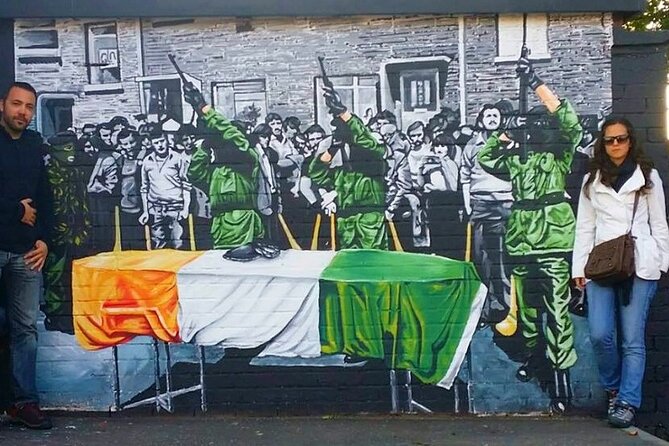
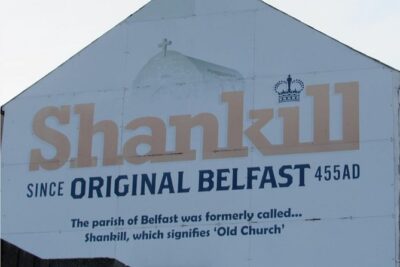
Then the tour moves to Shankill Road, on the loyalist side. You learn the road is split into lower and upper sections, and you get a sense of how old this area is, described as dating back to 445 AD. That number does not mean every building is that old. It signals continuity of place and community, which is important when you compare how each side understands its own history.
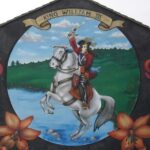
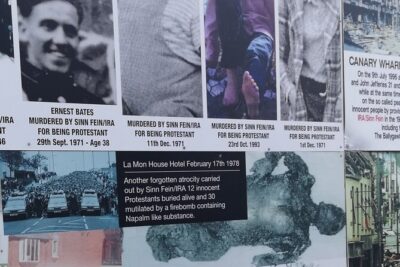
Shankill Road is also linked with the birth place of groups like the UVF and UFF. The guide connects William of Orange through to more recent references and events. And if your timing falls close to July, you might see one of the notorious bonfires. That detail gives you a way to connect seasonal tradition to political identity, and why public rituals can matter as much as policy.
You then get to Shankill Graveyard, where you have the chance to take photos of loyalist murals. The murals here depict loyalism and British history, and the graveyard setting adds weight. The art is not only communication, it is memory anchored to people and place.
This part of the tour can be a great check on your assumptions. If you started the day expecting one simple story of good versus bad, the Shankill stops push you to recognize that each community has its own heroes, victims, and interpretive language. A careful guide helps you hold that complexity without turning the day into an argument.
How the guide, especially Jim, makes or breaks the ride
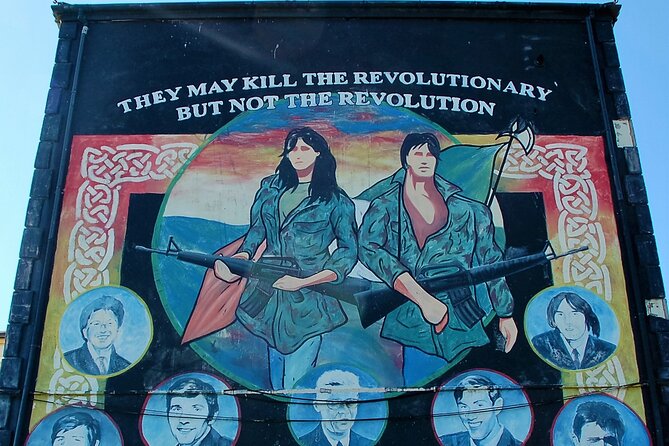
This is the kind of tour where the guide matters a lot. One of the most common highlights is how guides like Jim handle the ride like an organized conversation. The feedback emphasizes deep background plus a nuanced take on the current socio-political situation in Northern Ireland.
In practice, that means you do not just hear a list of events. You get context for why each mural exists, why each street name is a political signal, and how today’s tensions connect back to older structures. The best guides also manage the emotional tone, so the stops stay informative rather than chaotic.
I also like that the tour format gives the guide room to talk. You are in a car, moving between points, and that creates natural transitions. You can absorb one stop, then get the thread that ties it to the next. That is how you stop feeling like you are collecting random photos.
If you care about getting real meaning out of Belfast’s street art and memorial spaces, choose this tour when you know your guide is strong. Based on the consistent praise around Jim’s explanations, that is a major reason the tour has such strong ratings.
Who should book this Belfast cab tour, and who should skip it
This tour fits best if you want a structured overview of Belfast’s conflict history and you prefer learning from a local guide. It is also a good fit if you like murals and want them explained in context, not just pointed at.
It is especially useful if you have limited time. A walking tour can cover a smaller area well, but a cab tour helps you cover a broader arc across neighborhoods in about 2 hours. That matters when you are trying to understand the city beyond one district.
I’d also suggest it if you enjoy seeing how history shows up in everyday spaces: libraries, monasteries, walls, and streets. This tour treats those places like living documents.
I would be cautious if you want light entertainment or if you are sensitive to stories connected to imprisonment and violence. The tour includes a hanging jail era, hunger strike history, and references to attacks. Even with careful guiding, it is not a “casual” topic.
Should you book Express Terror and Peace?
If you want a guided, private way to understand Belfast’s Troubles-era neighborhoods through murals and landmark stops, this is one of the better routes. The private taxi format gives you the right balance of movement and attention. And the strongest proof is the consistent praise for guides like Jim who deliver clear background with nuance, not just names and dates.
Book it if you want context you can carry into the rest of your trip. Many departures are booked ahead, and the average booking timing is about 18 days in advance, so planning sooner is smart.
Skip or postpone it if you are traveling purely for upbeat sightseeing, or if your group is not ready for heavy political subject matter. In that case, a lighter city tour could match your mood better.
FAQ
How long is the Express Terror and Peace private Belfast cab tour?
It runs for about 2 hours (approx.).
Is this tour private or shared?
This is a private tour. Only your group participates.
Where does pickup happen?
Pickup is offered from Belfast city center within a 1 km radius from Belfast City Hall.
Do you pick up from cruise ship ports?
No. There is no pickup from cruise ship ports. The note says you can meet outside Belfast City Hall front gates, and the cruise ship shuttle bus drops you outside Visit Belfast, across the street from City Hall.
What if I need a pickup from an airport or train station?
The notes say there is a surcharge for pickups outside the city center, paid on the day in cash only.
Are tickets needed or paid for at the stops?
The listed stops include free admission tickets.
What language is the tour in?
The tour is offered in English.
Are children allowed?
Children must be accompanied by an adult.
What is the cancellation policy?
You can cancel for free up to 24 hours in advance for a full refund.
Put up recently for Belfast
- Game of thrones -Giants causeway luxury tour 9 hrs 25 locations★ 5.0 · 1 review
- Private One-way Transfer From Belfast Int. Airport to Belfast★ 5.0 · 1 review
- Enchanted Shores: Belfast to Giant’s Causeway★ 5.0 · 1 review
- CO2-Offset |Departure Belfast to BHD or BFS Airport by Luxury Van★ 5.0 · 1 review
- SAY NOTHING 1 hr express taxi tour – The Troubles living history★ 5.0 · 1 review
- Belfast Troubles Walking Tour: A Journey Through History★ 5.0 · 1 review
Troubles Taxi Tours, compared.
Browse the lists this tour appears in