Review · FULL-DAY
Derry Londonderry Private Full Day Tour From Belfast
Derry will stick in your head. This private full-day tour from Belfast turns the city into a living lesson, with a local historian and political activist guide walking you through Free Derry Corner, the Bogside murals, and the events around Bloody Sunday. I love the way the guide connects street-level details to what was going on politically, and I also like that you travel in your own private minivan, with pickup so you are not wasting time figuring out routes.
The main thing to know is that this day covers heavy, real-world history. If you want a light, purely scenic outing, the Troubles content will feel intense.
In This Review
- Key moments that make this tour worth your time
- From Belfast to Derry in one day, without the stress
- Free Derry Corner: the photo stop with real meaning
- The Bogside Artists, the Battle of the Bogside, and the streets outside the walls
- Bloody Sunday memorial and Operation Motorman: how 1972 changed everything
- Republican murals and Bloody Sunday context
- The Bloody Sunday memorial stop
- Derry Walls: 400 years of defense, plus the best city views
- Guildhall to Peace Bridge: architecture as a political statement
- Guildhall and the city square
- Peace Bridge and the handshake across the Foyle
- Peace Flame
- Tower Museum and Museum of Free Derry: pick the angle that fits you
- Tower Museum: Derry plus the wider story
- Museum of Free Derry: 1968 to 1972, told locally
- St Columb’s Cathedral, Derry Girls murals, and a border detour into Donegal
- St Columb’s Cathedral: a Planter’s Gothic landmark with siege connections
- Derry Girls mural: a fun selfie with a wink
- Grianán of Aileach in County Donegal, with an extra fee
- Price and value: what you pay for in a private Troubles-focused day
- Who this tour is best for
- Should you book this Derry Londonderry private tour?
- FAQ
- How long is the Derry Londonderry private full day tour?
- Where does pickup happen?
- What admissions are included on the tour?
- Is lunch included?
- Is the Tower Museum included in the price?
- Is Museum of Free Derry included?
- Can I cancel for a full refund?
Key moments that make this tour worth your time
- Local guide, not a script, with context that helps you read Derry’s neighborhoods
- Free Derry Corner photo time in the middle of the story, not as a quick stop
- Bogside murals and memorials, with clear explanations of 1969 and 1972 events
- The Derry Walls walk, a proper old-city orientation with real viewpoints and gates
- Peace Bridge and Peace Flame, modern reminders that the city chose another path
The ones that take all day:
- Game of Thrones and Giant’s Causeway Full-Day Tour from Belfast
★ 5.0 · 2,291 reviews - Northern Highlights Full-Day Guided Tour in Northern Ireland
★ 5.0 · 181 reviews - Giant’s Causeway Full Day Tour from Belfast
★ 4.0 · 147 reviews - Private Tour: ‘Game of Thrones’ and Giant’s Causeway Full-Day Tour from Belfast
★ 4.5 · 52 reviews
From Belfast to Derry in one day, without the stress
This is built for people who want a full Derry experience, but do not want to wrestle with schedules, transfers, and limited time. You start with pickup in Belfast City Centre from hotels or Airbnbs, and you ride in an air-conditioned vehicle just for your group. In plain terms, it means you can spend your energy on the places that matter, not on logistics.
Duration runs about 6 to 8 hours. That range matters because Derry is best when you can slow down at key points. This tour does that with a “stop when you need to” setup, which also helps if your group includes kids, grandparents, or anyone who just needs more time around photo spots.
And the “private” part is not marketing fluff. Your itinerary is guided, but you are not stuck in the herd. In past tours, guides like Barry and Paula have been praised for pacing, clear explanations, and adapting to individual needs such as walking limits, which is exactly what you want when you are mixing city walking with memorial sites.
Free Derry Corner: the photo stop with real meaning
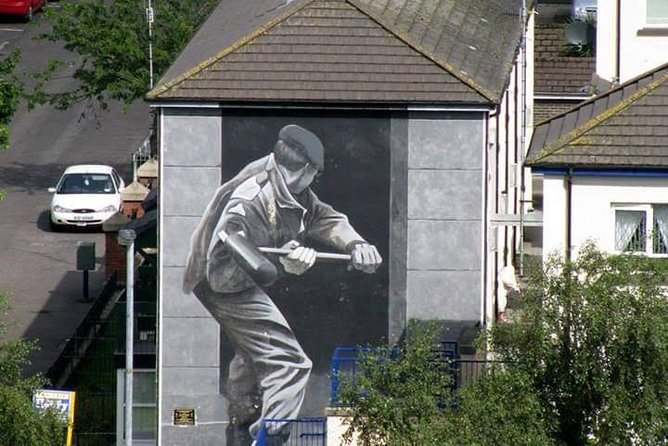
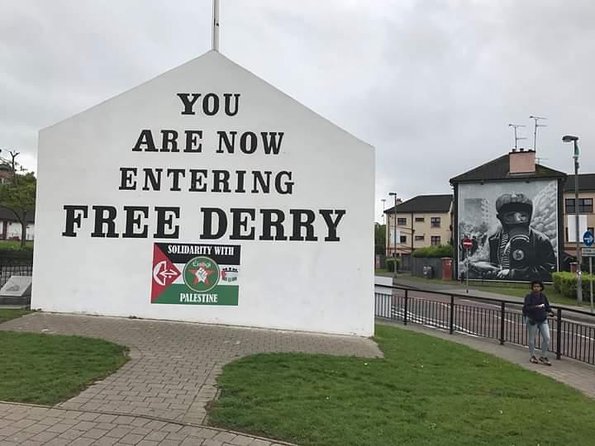
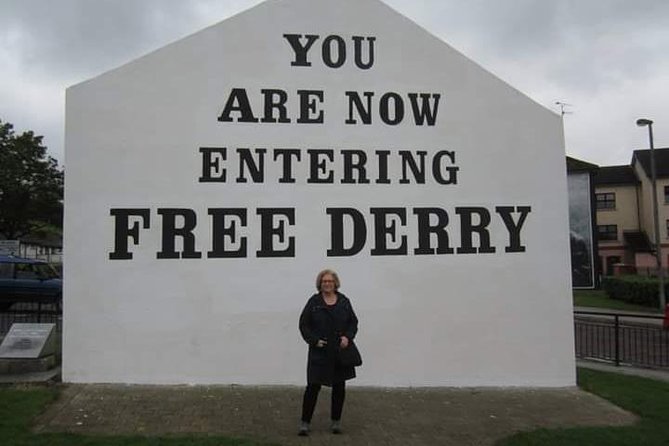
Your day starts at the world famous Free Derry Corner. Plan for a short, focused stop, around 30 minutes, aimed at getting photos while also understanding why this corner matters. It is one of those places where you can take a picture in seconds, but the story behind it takes longer to absorb.
Here’s what makes this stop valuable: it gives you a baseline view before you move into murals and memorials. When you later hear about events like the Battle of the Bogside and Bloody Sunday, you will recognize the mood of the streets. You are not just reading history on a plaque, you are seeing it in the way the community chose to mark space.
Photo tip: bring your most charged phone or camera battery. This is a high-energy photography point, and the tour keeps it short.
The Bogside Artists, the Battle of the Bogside, and the streets outside the walls
Next you move into The Bogside Artists area, about 15 minutes. The Bogside is a majority Catholic and Irish republican neighborhood, with the Protestant or Ulster loyalist area of the Fountain nearby. This “right next door” geography is a key theme of the whole day.
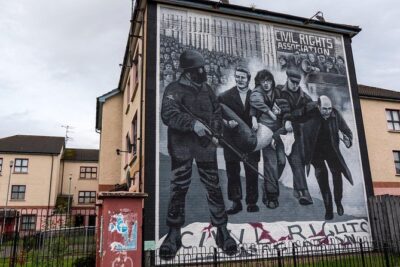
The murals here are not random decoration. They tie directly to the Battle of the Bogside, a communal riot that took place from 12 to 14 August 1969. You get the basics in a way that makes the timeline easier to hold: it erupted after an Apprentice Boys parade passed along the city walls past the Catholic Bogside. Rioting broke out between local unionists and the Royal Ulster Constabulary, and fighting continued for three days. Eventually the British Army was deployed to restore order.
Why this works as a guided stop: the tour helps you understand how a parade route, neighborhood identity, and policing decisions can collide. It is also one of the first major confrontations that fed into the wider conflict known as the Troubles. So while you are looking at artwork, your guide is explaining how people lived, organized, and protected their areas.
Practical note: this is an emotionally charged topic. Expect respectful discussion, not a casual “fun facts” tone.
Bloody Sunday memorial and Operation Motorman: how 1972 changed everything
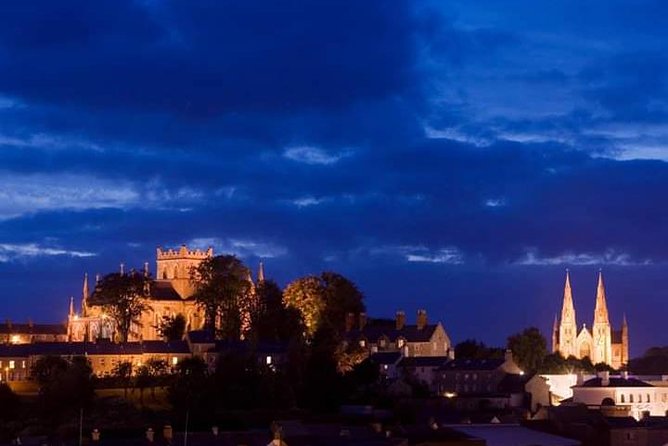
Your next stops focus on the turning points of 1972, especially how the British Army’s operations affected no-go areas and how the public remembered the killings.
Other Belfast outings worth a compare
Republican murals and Bloody Sunday context
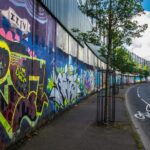
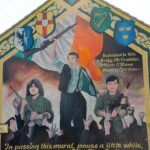
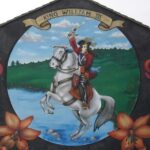
You get a short guided moment, about 15 minutes, at Republican Murals: Bloody Sunday. Here the tour connects two big ideas.
First is Operation Motorman, a major British Army operation carried out in the early hours of 31 July 1972. The goal was to retake “no-go areas,” areas controlled by residents, usually Irish republican paramilitaries. In Derry, the operation is linked to Operation Carcan, carried out as part of Motorman.
Second is the background that explains why those barricades existed. By the end of 1971, there were dozens of barricades around what people called Free Derry, with many impassable even to armored vehicles.
You also get key context about how the conflict escalated beyond Derry. In the tour framing, the British government implemented Motorman about ten days after a major bombing campaign in Belfast in July 1972, which brought increased pressure and a larger military response.
The Bloody Sunday memorial stop
Then comes Bloody Sunday Memorial, about 20 minutes. This is one of the most direct “memory stops” on the day.
The tour explains that on 30 January 1972 in the Bogside area, British soldiers shot 28 unarmed civilians during a protest march against internment. Fourteen people died, thirteen killed outright and a fourteenth later from injuries. The narrative also covers that some victims were shot while fleeing, others while trying to help the wounded, and that people were injured by rubber bullets or batons. The soldiers involved were members of the 1st Battalion, Parachute Regiment, often called 1 Para.
You also hear what happened afterward: the initial Widgery Tribunal broadly cleared the soldiers, but it was criticized widely as a whitewash. Later, the Saville Inquiry concluded in 2010 that the killings were unjustified and unjustifiable, that those shot were unarmed, that no bombs were thrown, and that soldiers put forward false accounts to justify firing. A formal apology was made, and police began a murder investigation.
Why this portion is so valuable on a private tour: you are not juggling your own research. The guide gives you the sequence, the investigations, and the impact on attitudes toward the British Army and the rise of support for the Provisional IRA. It makes the city feel understandable, even if it is painful.
Derry Walls: 400 years of defense, plus the best city views
After the historical weight, you shift to something physically grounding: The Derry Walls. This stop includes a guided visit, about 30 minutes, focused on the Ancient City Walls and the Canon.
Derry is famous because it is the only remaining completely intact walled city in Ireland. The walls are approximately 1 mile, or 1.6 km, in circumference, with varying height and width. Built between 1613 and 1619, they still form a walk around the inner city. That matters because the walls are not just walls. They are your “orientation device” for Renaissance street planning inside and the layout of Derry beyond.
You learn the names of gates such as Bishop’s Gate, Ferryquay Gate, Butcher Gate, and Shipquay Gate, with later gates added including Magazine Gate, Castle Gate, and New Gate. The tour also frames Derry’s siege history, including the Siege of Derry in 1689, which lasted 105 days and earned the nickname the Maiden City. You also hear the detail that the city’s gates were shut on the Jacobite attempt by apprentices, a story that helps explain why the walls still feel iconic.
If you like viewpoints, you will appreciate the way the walls let you see Derry’s real geography. If you prefer easy walking, you still get the key wall story without needing to turn it into a long hike, since this is structured into your day.
Guildhall to Peace Bridge: architecture as a political statement
Then you move through a set of landmarks that show Derry’s shift from conflict to connection.
Guildhall and the city square
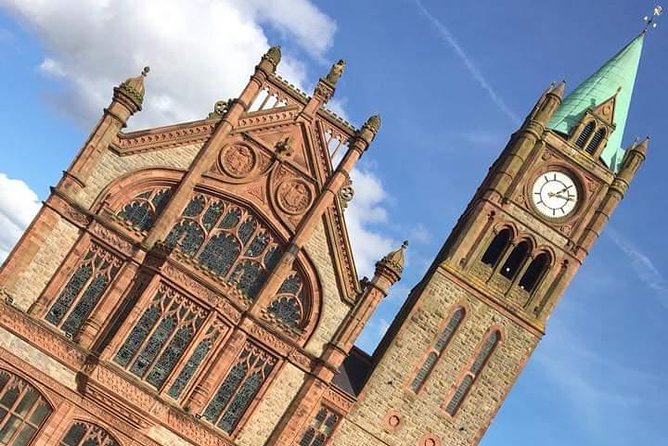
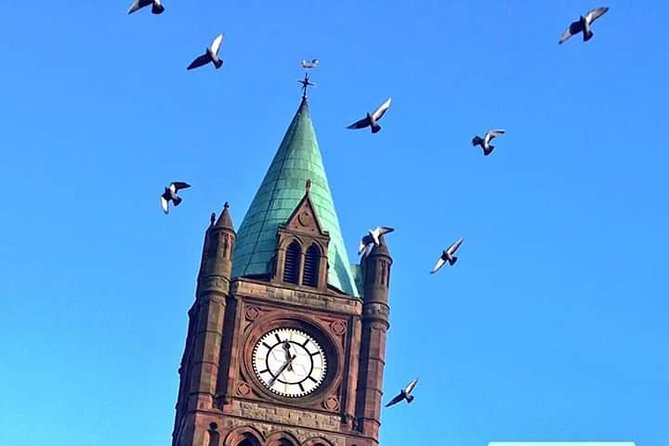
At Guildhall, about 30 minutes, you hear how the old Guildhall in the Diamond area was destroyed by fire in Victorian times, and the site became a city square. The later building opened in 1890, with the early title Victoria Hall connected to the empire-era habit of naming landmarks after monarchs. During the Troubles, the Guildhall saw terror attacks and was badly damaged by two bombs in 1972, then restored and reopened in 1977.
This stop is useful because it shows how major civic buildings became targets, not just neighborhoods and streets.
Peace Bridge and the handshake across the Foyle
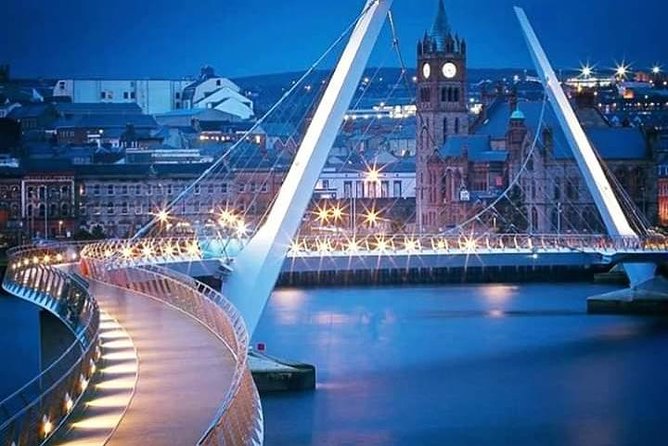
Next is the Peace Bridge and its story. About 30 minutes. The bridge is meant to bridge a physical and political gap across the River Foyle. It links the Protestant Waterside and the Nationalist Bogside with two structural arms heading in opposite directions, then joining in a symbolic handshake.
The details are impressive enough to matter: opened in 2011, it is 235 meters long and about 4 meters wide, designed as a curved footpath, track, and cycleway that runs from the Guildhall area to Ebrington Square and St Columb’s Park on the far side.
Even if you do not cycle or walk the full length, the guided explanation helps you read the bridge as a deliberate choice, not just a photo opportunity.
Peace Flame
Then you stop for a look at the Peace Flame, about 10 minutes. It is connected in the tour context with Dr Martin Luther King and the end of the conflict in Northern Ireland. It is a short stop, but it changes the mood of the day from “events and aftermath” to “what replaced them.”
Tower Museum and Museum of Free Derry: pick the angle that fits you
This day includes at least one museum stop, and admission rules vary by site. The key is to go in knowing what you want from the experience.
Tower Museum: Derry plus the wider story
The Tower Museum is a major stop, about 30 minutes. It has permanent exhibitions including the Story of Derry and an Armada shipwreck exhibit titled La Trinidad Valencera. It also includes an open air viewing facility in the city center, giving panoramic views over the city and the River Foyle.
Important for budgeting: Tower Museum admission is not included. Adults pay £4, children £2, and concession £2.40.
Museum of Free Derry: 1968 to 1972, told locally
The Museum of Free Derry focuses on the 1960s civil rights era and the Free Derry Irish nationalist movement in the early 1970s. It opened in 2007 and tells the story of what happened in Derry during the period known as Free Derry, from 1968 to 1972. The tour frames it as being told from the viewpoint of people most involved and most affected, located in the Bogside area in the heart of where events took place.
A useful detail from the museum story is how the narrative is anchored in specific lived locations and injuries. The museum’s focus also connects Derry’s events to a wider international human rights conversation, including comparisons to the civil rights movement in the USA and other historical massacres named in the museum’s context.
Admission for this museum is also not included on the tour, so you will want to have that budget ready.
Which should you prioritize? If you want civic and city-wide context, Tower Museum can fit well. If you want the most direct viewpoint on the civil rights era and Free Derry, choose the Museum of Free Derry.
St Columb’s Cathedral, Derry Girls murals, and a border detour into Donegal
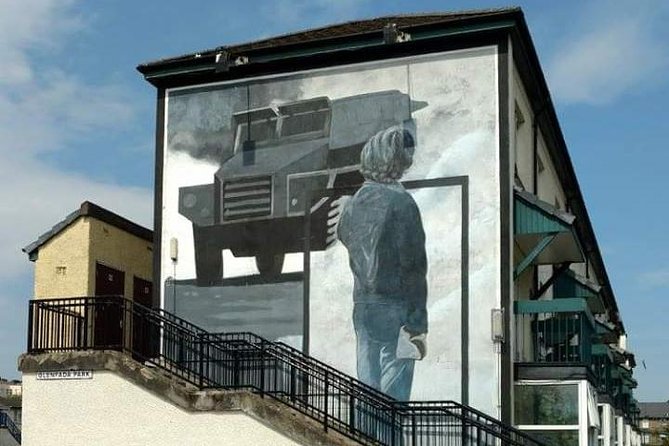
The last chunk of the day balances memory with lighter pop culture and sweeping views, so your brain does not stay in crisis mode all day.
St Columb’s Cathedral: a Planter’s Gothic landmark with siege connections
At St Columb’s Cathedral, about 30 minutes, you learn the long church story tied to conflict. The original diocesan cathedral site was destroyed due to the Nine Years’ War, then stones from the ruins were used for the city walls when Sir Henry Docwra entered with troops in 1600. The current structure was completed in 1633 in Planter’s Gothic style.
The tour context also notes that the cathedral has documents dating back to the Siege of Derry and holds the original keys of the city. It also includes a memorial to Valentine Munbee McMaster VC.
This is a good stop if you like learning how architecture and conflict are intertwined in one place.
Derry Girls mural: a fun selfie with a wink
Then comes the Derry Girls Mural stop, about 20 minutes, described as world famous. This is where you get your selfie moment and a quick cultural reset, especially if your group includes teens or just people who want a break after memorial sites.
Grianán of Aileach in County Donegal, with an extra fee
Finally, the tour offers an optional extra that crosses into the Republic of Ireland to Grianán of Aileach in County Donegal. This is an extra £60 paid directly to your tour guide. The stop is listed as about 30 minutes.
This hillfort sits on top of Greenan Mountain at 244 meters high. The tour explains that the main structure is a 19th-century reconstruction of a stone ringfort thought to have been built around the 6th or 7th century by the Northern Uí Néill. On a clear day, the tour says you can see the province of Ulster and 9 of Ireland’s 32 counties.
That optional stop is worth considering if you like big views and a little geography change. If you prefer to keep the day tightly focused on Derry itself, you can skip this and stay local.
Price and value: what you pay for in a private Troubles-focused day
At $378.97 per person for a private full-day tour, the price is not “cheap.” But it also is not random. You are paying for four value drivers that matter in a day like this:
- Private transportation from Belfast, with pickup and round-trip transfer
- A fully qualified local guide who can connect neighborhoods and events
- A schedule that hits major sites without you needing to plan every turn
- A city walking component paired with memorial context, which is hard to replicate alone in one day
Also, the tour notes group discounts, and that can make a big difference if you have a small group of friends or family. Booking tends to be done about 56 days in advance, which is a hint that people plan early for a day that sells out.
What to consider before you book: some museum entries are not included (Tower Museum and Museum of Free Derry), and lunch is also not included. Tips are not included either. In other words, factor in a bit of on-the-day spending for entrances and food.
Who this tour is best for
This is a great fit if you want Derry from the ground up, not just highlights. It suits:
- Adults and teens who are interested in the Troubles and civil rights history
- Families who want a structured day with a guide who can adapt to different needs
- Travelers who want a mix of memorial sites and real-world city orientation from the walls and central landmarks
- People who value thoughtful context over generic sightseeing
It may be less ideal if your group wants only upbeat, lightweight attractions. You will be walking through serious events and memorial framing.
Should you book this Derry Londonderry private tour?
I think you should book if you want one day in Derry that feels organized, guided, and meaningful. The private format, the local guide storytelling, and the pairing of Free Derry Corner, the Bogside murals, Bloody Sunday context, and the Derry Walls is a strong way to get your bearings fast and understand why the city looks the way it does today.
I would skip it if you are sensitive to heavy history and prefer a short, casual city tour with minimal political content. Also, if your budget is tight, remember that some museum admissions and lunch are not included, so plan for that.
If you do book, I suggest you come with two questions for your guide: what changed for locals after 1969 and 1972, and how does the city use landmarks like Peace Bridge now. Those are the questions this tour is built to answer.
FAQ
How long is the Derry Londonderry private full day tour?
It runs about 6 to 8 hours.
Where does pickup happen?
Pickup is offered from hotels or Airbnbs in Belfast City Centre. Cruise ship pickup is also available for an extra fee.
What admissions are included on the tour?
Admission tickets are included for stops like Free Derry Corner, The Bogside Artists, Republican Murals: Bloody Sunday, Bloody Sunday Memorial, The Derry Walls, Guildhall, Peace Bridge, Peace Flame, St Columb’s Cathedral, and the Derry Girls mural. Tower Museum and Museum of Free Derry admissions are not included.
Is lunch included?
Lunch is not included.
Is the Tower Museum included in the price?
Tower Museum admission is not included. The listed adult price is £4.
Is Museum of Free Derry included?
Museum of Free Derry admission is not included.
Can I cancel for a full refund?
Yes. You can cancel up to 24 hours in advance for a full refund.
Put up recently for Belfast
- Game of thrones -Giants causeway luxury tour 9 hrs 25 locations★ 5.0 · 1 review
- Private One-way Transfer From Belfast Int. Airport to Belfast★ 5.0 · 1 review
- CO2-Offset |Departure Belfast to BHD or BFS Airport by Luxury Van★ 5.0 · 1 review
- Enchanted Shores: Belfast to Giant’s Causeway★ 5.0 · 1 review
- SAY NOTHING 1 hr express taxi tour – The Troubles living history★ 5.0 · 1 review
- Belfast Troubles Walking Tour: A Journey Through History★ 5.0 · 1 review
Full-Day, compared.
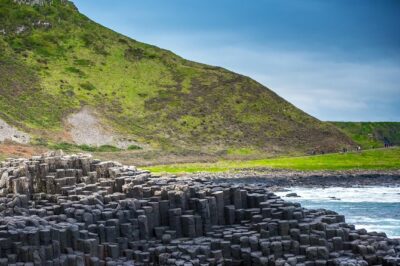
Game of Thrones and Giant’s Causeway Full-Day Tour from Belfast
Read our review →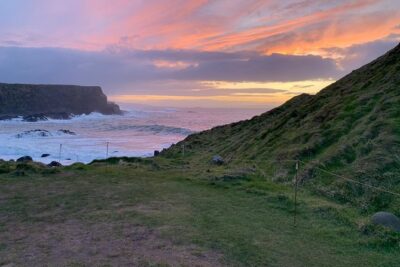
Northern Highlights Full-Day Guided Tour in Northern Ireland
Read our review →
Private Tour: ‘Game of Thrones’ and Giant’s Causeway Full-Day Tour from Belfast
Read our review →
Luxury Tours Belfast. Full day Private Hire Tour for 2- 6 people
Read our review →

Full-Day Private Tour of Giants Causeway with Pick Up
Read our review →