
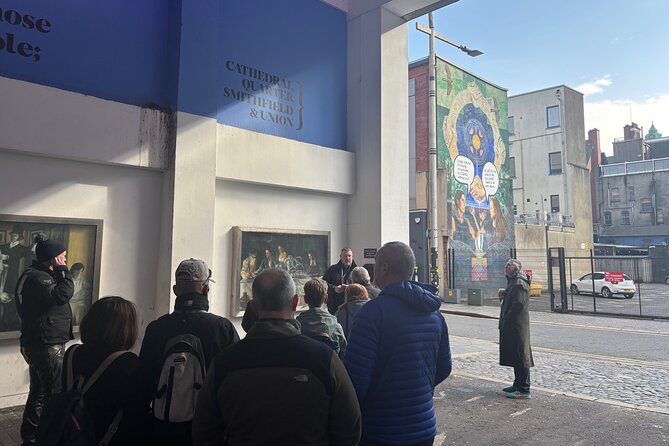
Review · WALKING TOURS
1798 A Belfast Rebellion Walking Tour
1798 in Belfast is a story you can read on brick and stone. This 2.5-hour Belfast Rebellion walking tour strings together the places where the United Irishmen gained momentum and where Belfast life collided with ideas from the wider world.
I love the tight route through central landmarks, with short stops that keep the story moving. I also love the guide energy, with Colin Shaw described as the kind of person who makes names and dates feel human, then takes questions without rushing you.
One consideration: it is about 2 hours 30 minutes of walking, and the tour is listed for a moderate physical fitness level, so plan for steady time on your feet.
In This Review
- Key highlights worth planning for
- Making sense of 1798 from Belfast’s street corners
- Meeting at Belfast City Hall, and the feel of a 2.5-hour walk
- City Hall to Linen Hall: the setup for rebellion and Thomas Russell
- St Mary’s Roman Catholic Church and the penal laws for Catholics
- Kelly’s Cellars: secret meetings, plotting, and a historic pub
- First Presbyterian Church: wealth, merchants, and who held influence
- Assembly Rooms Belfast: McCracken’s court martial and uneasy plans
- St George to Joy’s Entry: where Belfast gets its name
- Finishing at Mary Ann McCracken, abolitionist educator, United Irishwoman
- Value and fit: who this tour is best for
- Should you book this 1798 Belfast Rebellion walking tour?
- FAQ
- How long is the 1798 Belfast Rebellion walking tour?
- Where does the tour start, and what time is it?
- What language is the tour offered in?
- What is the maximum group size?
- Is there any audio equipment included?
- Are admission tickets included for the stops?
- Is the tour physically demanding, and are service animals allowed?
- What is the cancellation policy for a full refund?
Key highlights worth planning for
- Colin Shaw-led storytelling that connects local Belfast events to wider revolutionary currents
- Real sites in the city center, from Belfast City Hall to St Mary’s Roman Catholic Church
- Thomas Russell and Henry Joy McCracken placed into their Belfast context, not taught as random names
- Kelly’s Cellars as both a secret meeting-place setting and a historic pub stop
- Vox whisper audio so you can actually hear the guide throughout the walk
- Free admission tickets listed at each stop, which helps keep costs predictable
More Walking Tours in Belfast
- A History of Terror – Belfast City Centre Walking Tour
★ 5.0 · 2,883 reviews - Belfast Political Tour-Conflicting Stories Walking Tour
★ 4.5 · 459 reviews - Best of Belfast Walking Tour
★ 5.0 · 399 reviews - Belfast Eclectic Walking City Center Experience, The Marti Way
★ 5.0 · 348 reviews
Making sense of 1798 from Belfast’s street corners
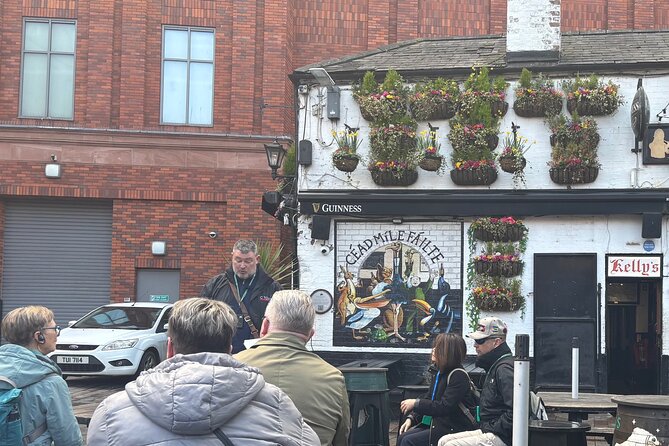
Belfast in the late 1700s was changing fast, and the people living there felt it. The story of the United Irishmen is often told in big-picture terms, but this tour keeps pulling you back to Belfast, street by street, church by church, meeting room by meeting room. You end up seeing how politics, religion, and everyday life could push people toward rebellion.
What I like about this approach is the way the tour frames the rebellion as something built over time. You do not get a single dramatic moment and then a shrug. You get context, then consequences, then a sense of how ordinary Belfast corners became part of a much larger upheaval.
And you get the human scale. You hear about Thomas Russell and Henry Joy McCracken as individuals who mattered in the streets and meetings of the city, not just as history-book labels.
Meeting at Belfast City Hall, and the feel of a 2.5-hour walk
The tour starts at Belfast City Hall, Donegall Square N, Belfast BT1 5GS, with a 10:00 am start. It ends back at the same meeting point, which makes it easy to slot into a Saturday morning or early afternoon plans.
This is planned as an easy-to-manage group outing. It runs for about 2 hours 30 minutes, and the group size tops out at 25 travelers, so you are not lost in a crowd. The tour also includes a Vox whisper set, which is a big deal on city walks, when street noise can steamroll a normal voice.
Since the tour is rated for a moderate physical fitness level, I’d treat it as steady strolling with several short site stops. If you are the type who needs frequent long breaks, you might feel a bit rushed. If you’re fine with short pauses and moving along, it works well.
City Hall to Linen Hall: the setup for rebellion and Thomas Russell
Your first stop is Belfast City Hall, where the guide gives the lead-up story to the 1798 United Irishmen Rebellion. This matters because the rebellion did not pop out of nowhere. The early parts of the tour help you understand the pressures and choices that built toward 1798, so later names land with weight.
Next you move to The Linen Hall, a site tied to learning and one of the rebellion’s key figures. Here you connect the library story to Thomas Russell, described as an infamous librarian and United Irishman. That detail is a reminder that political commitment did not live only in back rooms. It could also live in places people associated with reading, debate, and public life.
A practical note: the stops here are short, with each location designed as a focused “chapter” of the overall story. If you like history that moves at a brisk but not chaotic pace, you’ll appreciate that structure.
St Mary’s Roman Catholic Church and the penal laws for Catholics
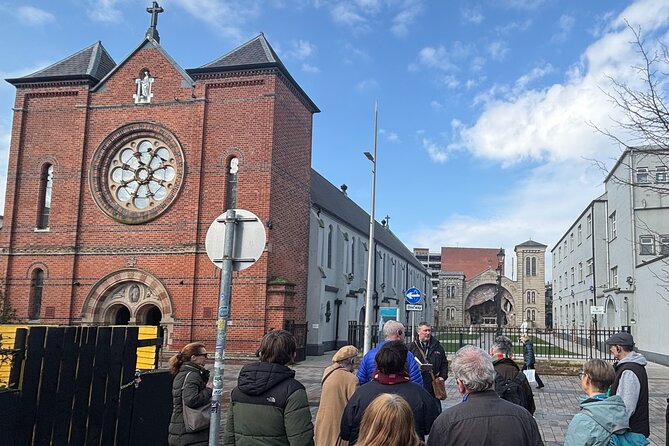
At St Mary’s Roman Catholic Church, you shift from the political build-up into the religious and legal reality that shaped Catholic life. The tour focuses on how penal laws impacted Ireland’s Catholics, and how the chapel was established in the late eighteenth century.
This is where the tour helps you avoid a simplistic interpretation of who wanted change and why. You start to see how legal restrictions could harden identities and limit options, even before anyone reached for a rebellion.
You also get a sense of time. The tour uses the late eighteenth-century chapel point to anchor the idea in a specific period, so it feels less like a vague statement and more like a lived set of circumstances.
Still in Belfast? These are the next ones up:
- Titanic Belfast Entrance Ticket: Titanic Visitor Experience Including SS Nomadic
★ 4.5 · 3,698 reviews




Kelly’s Cellars: secret meetings, plotting, and a historic pub
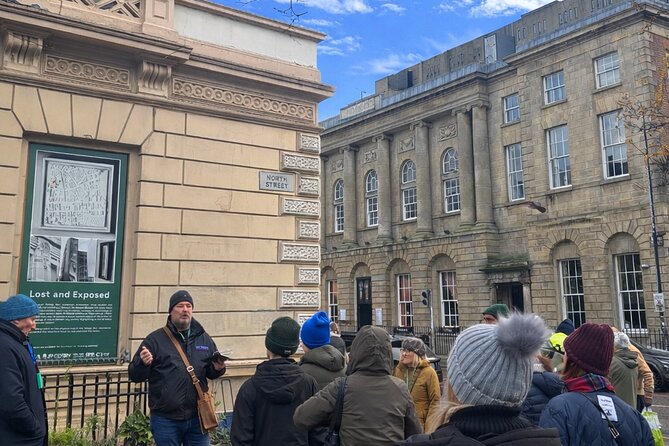
Then comes one of the most atmospheric stops, Kelly’s Cellars. The tour frames it as a secret meeting place where the United Irishmen plotted their rebellion. At the same time, it is a working piece of Belfast pub history, which makes it easy to imagine the back-and-forth of planning while also recognizing you’re in a real, everyday place.
I like this stop because it ties the story to a physical setting. You are not just hearing about clandestine behavior. You are standing in a location that is associated with that secrecy.
One more plus: a review mentions a welcome cup of coffee midway through the tour, and that kind of timing works well. It gives your brain a break before the tour returns to more names, more institutions, and the bigger consequences of the rebellion.
First Presbyterian Church: wealth, merchants, and who held influence
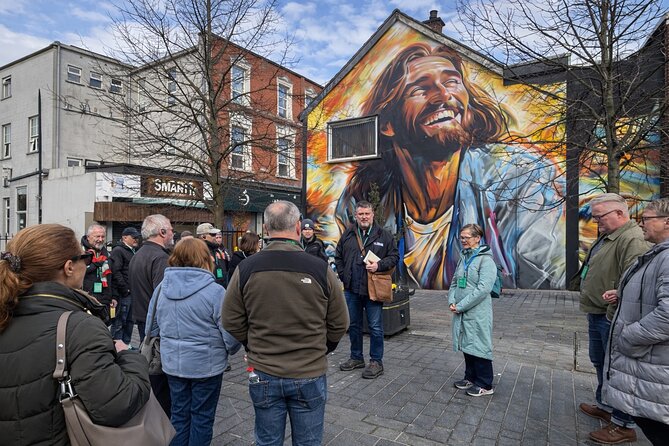
At First Presbyterian Church, the tour turns toward the Presbyterian community in Belfast. You hear how Presbyterians became wealthy merchants and how that economic influence shaped Belfast power. You also learn about prominent figures associated with the church.
For a lot of first-time visitors, this part is a reality check. It complicates the idea that the city’s history was only one kind of community story. Instead, you see a network of wealth, institutions, and social standing, all interacting with revolutionary ideas.
The stop is short, but it does important work in the overall narrative. It gives you a reason the rebellion could attract support across lines while still being grounded in Belfast’s local structure.
Assembly Rooms Belfast: McCracken’s court martial and uneasy plans
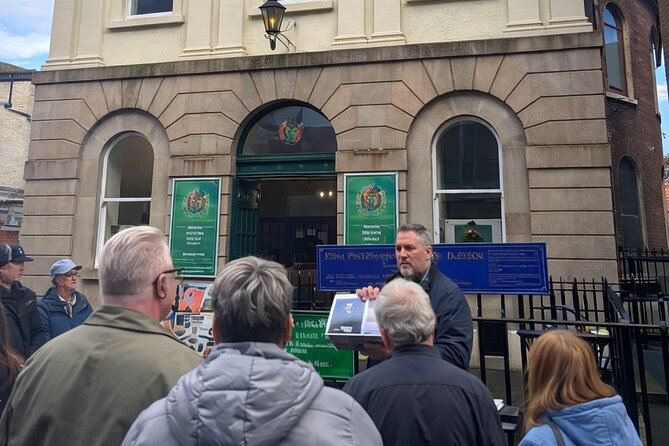
Your next major institutional stop is Assembly Rooms Belfast. The tour points you toward meetings that mattered, including the court martial of Henry Joy McCracken. This is the moment when the story leans into what happens after plotting, when the consequences start to close in.
The tour also mentions a failed proposal for a Belfast slaveship company. That detail can feel uncomfortable, but it is exactly the kind of connection that makes Belfast history feel honest. It shows how the economic and moral currents of the period were tangled together.
If you’re the type who likes learning how justice systems, commerce, and politics intersect, this is one of the more satisfying stops. You leave with a clearer sense of why people could feel trapped by the same institutions they sometimes benefited from.
St George to Joy’s Entry: where Belfast gets its name
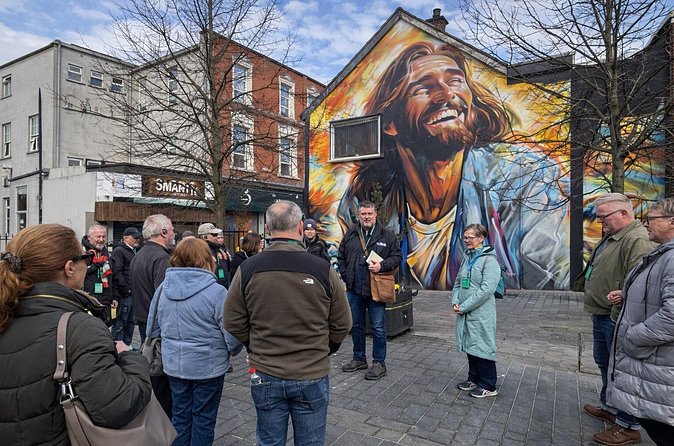
At Parish Church of St George, Belfast, you hear a key origin story: the first church in Belfast stood on this site, and it is also linked to where Belfast gets its name. It’s a helpful pivot. After the dense political and legal sections, you step back into the city’s longer timeline.
Then the tour moves to Joy’s Entry, described as historic Entries in the oldest part of the city. You learn about the Joy family’s influence on Belfast, and how these historic entries are now used as an outdoor art gallery.
This stop works as a mental reset. You go from rebellion and court martial back to city fabric and daily life. If you like streets that show you age and layers, Joy’s Entry is a good place to slow down mentally, even if the tour schedule keeps moving.
Finishing at Mary Ann McCracken, abolitionist educator, United Irishwoman
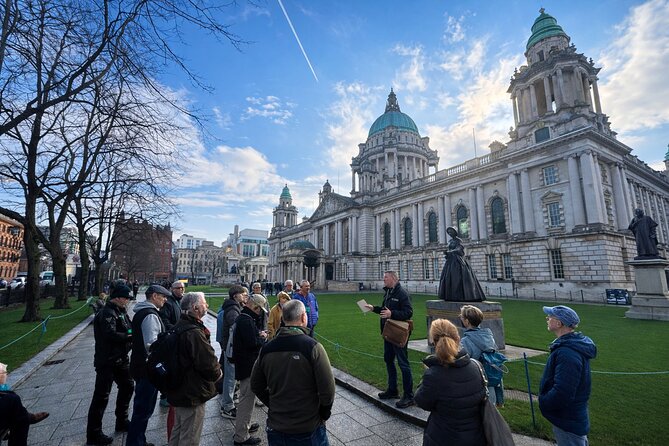
You wrap up at Belfast City Hall again, finishing at the statue of Mary Ann McCracken. The tour frames her as an abolitionist, educator, and United Irishwoman. Ending on her makes a strong shift from rebellion as a single 1798 crisis to rebellion as a longer moral and social thread.
If your head is full of men’s names by the end, this is a helpful correction. Mary Ann McCracken brings the story into the realm of education and abolition, areas that connect politics to everyday consequences.
Value and fit: who this tour is best for
At $35.73 per person for about 2.5 hours, this is priced like a focused walking experience, not a casual stroll. The value comes from a few specifics. You get a guided story led by Colin Shaw, audio support via a Vox whisper set, and free admission tickets listed for each of the main stops. You also get a route that is built for first-time visitors who want a real understanding of how Belfast’s early Presbyterian settlers and Catholic penal realities fit into the rebellion.
It is also a good choice if you like context that reaches beyond Ireland. One of the strongest themes in the guide style described is connecting Belfast’s 1790s conditions to the American War of Independence and the French Revolution. That kind of comparison helps you understand why revolutionary talk traveled and why some Belfast actors saw themselves in a bigger wave.
Who it suits best:
- First-time visitors to Belfast who want the 1798 story explained in a practical, story-driven way
- People who like questions and discussion, not just a lecture
- History buffs who enjoy name and place matching, so you remember what mattered and where
Who should think twice:
- Anyone who needs a very slow pace or frequent long breaks, since the tour is about 2.5 hours on foot
- People who prefer totally self-paced sightseeing might find the scheduled stops a bit structured
One small planning tip: it’s said to be booked about 10 days in advance on average, so if you have a specific Saturday in mind, earlier booking can save you from last-minute disappointment.
Should you book this 1798 Belfast Rebellion walking tour?
I think you should book it if you want a clear, guided route through the places that shaped the 1798 rebellion and Belfast life around it. Colin Shaw’s style, with enthusiasm and a willingness to answer questions, is a big reason the tour gets top marks, and the Vox whisper audio is the kind of practical detail that makes the whole thing feel smoother.
If you care about understanding the city beyond postcards, this works well. It turns central Belfast into a set of clues, and by the end you know how the rebellion was built, who pulled different threads, and what happened when power pushed back.
If you want a history tour that is structured but not stiff, and you’re okay with walking for a couple of hours, this is a strong fit.
FAQ
How long is the 1798 Belfast Rebellion walking tour?
The tour lasts about 2 hours 30 minutes.
Where does the tour start, and what time is it?
It starts at Belfast City Hall, Donegall Square N, Belfast BT1 5GS, UK at 10:00 am and ends back at the meeting point.
What language is the tour offered in?
The tour is offered in English.
What is the maximum group size?
The tour has a maximum of 25 travelers.
Is there any audio equipment included?
Yes. A Vox whisper set is included so you can hear your guide clearly.
Are admission tickets included for the stops?
The itinerary lists admission ticket free at each stop.
Is the tour physically demanding, and are service animals allowed?
The tour lists a moderate physical fitness level and says service animals are allowed.
What is the cancellation policy for a full refund?
You can cancel up to 24 hours in advance for a full refund. If you cancel less than 24 hours before the start time, the amount paid is not refunded.
Put up recently for Belfast
- Game of thrones -Giants causeway luxury tour 9 hrs 25 locations★ 5.0 · 1 review
- Private One-way Transfer From Belfast Int. Airport to Belfast★ 5.0 · 1 review
- Enchanted Shores: Belfast to Giant’s Causeway★ 5.0 · 1 review
- CO2-Offset |Departure Belfast to BHD or BFS Airport by Luxury Van★ 5.0 · 1 review
- Belfast’s Iconic Sites: A Self-Guided Audio Tour★ 5.0 · 1 review
- SAY NOTHING 1 hr express taxi tour – The Troubles living history★ 5.0 · 1 review
Walking Tours, compared.
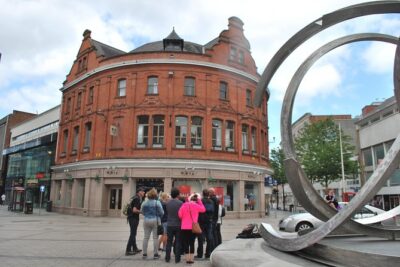
A History of Terror – Belfast City Centre Walking Tour
Read our review →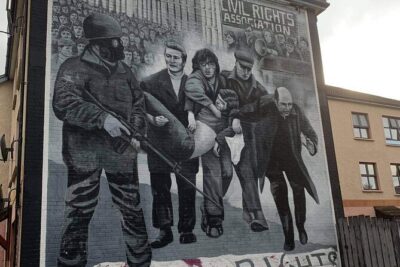
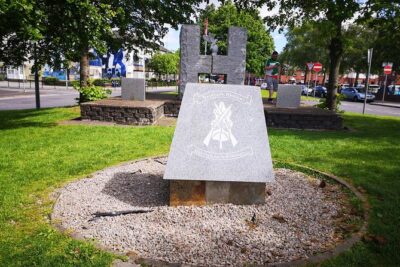
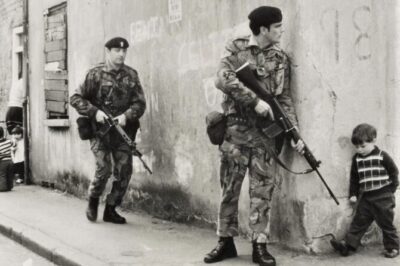
Belfast Political Tour-Conflicting Stories Walking Tour
Read our review →
Belfast Eclectic Walking City Center Experience, The Marti Way
Read our review →
Browse the lists this tour appears in